
Find Wausau Death Index
Wausau Death Index research starts with Marathon County, but the city seat matters just as much as the county line. Wausau is the county seat, and county death records date back to 1868, so the local path is old, clear, and useful for both family history and certified copy work. If you know only a year, a burial clue, or a likely neighborhood, the county office and the local history sources below can help narrow the search before you move to state tools. That keeps the record hunt close to Wausau and cuts down on guesswork.
Wausau Death Index Sources
The Marathon County Register of Deeds is the main office for a Wausau Death Index search. It keeps county death records for Wausau and the rest of Marathon County, and it issues certified copies to eligible requesters. Because Wausau is the county seat, the office is part of the same local record center that has handled the county file for a long time. That makes it the right first stop when the death belongs in the county book.
The local historical record trail is shown on the Marathon County Historical Society page below. That source is useful when you need research help, a local clue, or a second way to place a death in the county timeline. It often helps when the name is common or the place clue is thin, because a city death can be easier to match once the family line is set against local history.
The Wisconsin Historical Society's Wausau record page confirms the pre-1907 county run. FamilySearch also gives a county-level bridge through its Marathon County genealogy guide, which is useful for township names, surname changes, and family lines that repeat through the same part of the county.
The Marathon County Historical Society page at marathoncountyhistory.org sits behind the first image below.

That image helps anchor the local research side of the Wausau Death Index and keeps the city search tied to Marathon County history, not a broad statewide guess.
The Wausau record page at wisconsinhistory.org/Records/Article/CS2624 supports the historical society view and shows the county-era span behind the second local image.
That city image is a good visual marker for the older Wausau Death Index trail and the way the city record path stays tied to the county seat.
Wausau Death Index Office
The Marathon County Register of Deeds is the office to keep close when the death belongs in the local file. It covers Wausau and the rest of Marathon County, which means city records and county records follow the same office path. That is useful when a family story only gives you Wausau, a rough year, and maybe a cemetery hint. The county office can tell you whether the entry belongs in the older book or whether you should move on to later state records.
Certified copies matter here too. If you need the record for estate work, a family file, or a formal request, the register office is the place that can issue the copy. The office is also the best place to confirm whether a death is in the county run or already past the county period. That keeps the search practical and avoids sending a local record hunt to the wrong office too early.
The office route is especially useful in a city like Wausau because people often search by street name, church, or cemetery before they search by county form. If the surname is common, the county seat gives the search a stable base. A place clue from the city can make the county file much easier to sort.
The register office page at co.marathon.wi.us/Departments/RegisterofDeeds/ is the best local contact point for that work.
The Wisconsin DHS Vital Records page at dhs.wisconsin.gov/vitalrecords/index.htm gives the state fallback source for the image below when a Wausau death moves past the county era.
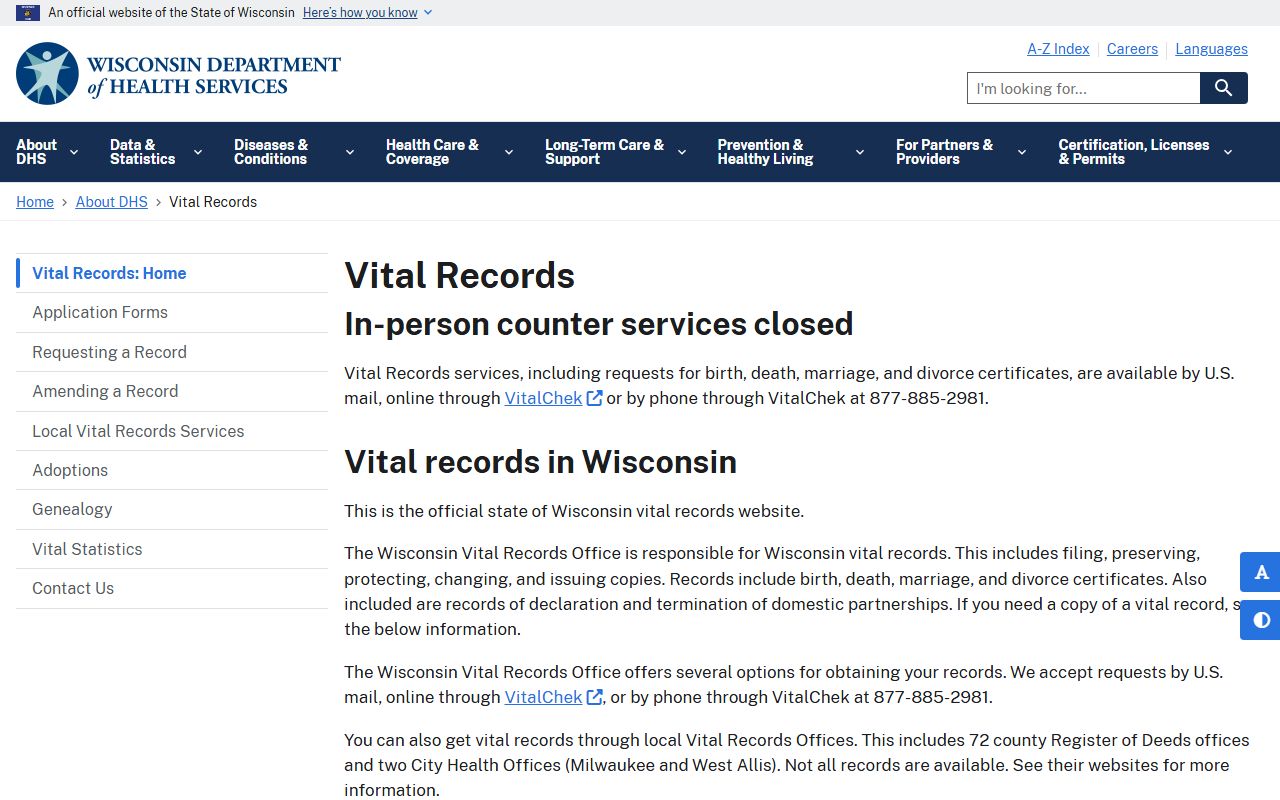
That state fallback image shows the later certificate path if a Wausau death has moved beyond the county era.
Wausau Death Index Before 1907
For Wausau Death Index work, the key cutoff is October 1, 1907. County death records date back to 1868, so the local books cover a long pre-state span that still matters today. If the death is from the nineteenth century or the first years of the twentieth century, the county file is the right place to start. The Wisconsin Historical Society page gives you the historical checkpoint that matches that local run and helps you compare a family clue with the record era.
The FamilySearch Marathon County guide is a good next step when the name is close but not exact. It can help with township names, burial clues, and local family branches. That matters in Marathon County because Wausau sits at the county center, but family lines may move through more than one nearby town before a death gets recorded.
The Wisconsin Historical Society Wausau page confirms the county-era record trail and pairs well with the local office page when you need to sort out a pre-1907 death. For a Wausau Death Index search, that is often enough to tell you whether the county office or the state office should answer first.
Note: Wausau deaths before October 1, 1907 stay in the county record path first, even if the final copy later comes from a different office.
Wausau Death Index Help
The Marathon County Historical Society helps when the death clue is thin. Local history, burial notes, and family references can often show the right year before a request is made. That is useful in Wausau because a city death may appear in a cemetery record or a family line long before it shows up as a clean certificate request. The historical society can also help explain how the city fit into the county over time.
FamilySearch adds a broader frame for the same search. A repeated given name, a spelling change, or a township clue can make the difference between a fast match and a slow one. The county guide is especially useful when you know the family stayed near Wausau but you do not yet know which branch used the record. A small clue can unlock the right county entry.
The state side is useful only when the date pushes past the county era. The Wisconsin DHS Vital Records page handles later records, while the Library of Congress Wisconsin guide explains the county and state split in plain terms. If the death is late, use the state route. If it is old, stay local until the county file is ruled out.
The county history page below is another useful clue source.
That image reinforces the local research side and shows why Wausau Death Index work often starts with the county center rather than a state office.
Wausau Death Index History
Wausau has a long county record trail for a city of its size. Death records date back to 1868, and the county seat role keeps those records tied to the same Marathon County center. That history matters because it means the city death record path has depth, but it is still orderly enough to search without a lot of drift. If you know the person lived, died, or was buried in Wausau, the county and city clues usually stay close together.
The historical society and county office together make the Wausau Death Index more than a name list. They show how the city fit into the county, how the older records were kept, and how the later state system took over newer certificates. That is important when the family story is thin but the place clue is solid. A city death may be easier to place by street or neighborhood than by date alone.
Wausau also rewards a step-by-step search order. Start with the county office. Compare the historical society page. Use FamilySearch if the surname or township needs a second pass. Move to DHS only when the record falls outside the county period. That keeps the search clean and helps you avoid a broad statewide guess.
When the clue is narrow, the Wausau Death Index becomes a useful map of local record work instead of a wide hunt. That is the best way to use the city and county sources together.