
Search Wisconsin Death Index
The Wisconsin Death Index points you to two record systems. Deaths filed before October 1, 1907 are usually found through county registers and the Wisconsin Historical Society. Deaths filed from October 1907 forward are handled through the Wisconsin Department of Health Services and local issuing offices. If you are trying to search Wisconsin death records, confirm the year first, then match the request to the right office. That saves time, cuts down on rejected applications, and helps you decide whether you need an index entry, a certified copy, or an extended fact-of-death record.
Wisconsin Death Index Overview
Wisconsin Death Index Sources
Wisconsin keeps death records in more than one place. That matters. State custody began on October 1, 1907, so newer records are handled through the Wisconsin Department of Health Services Vital Records Office. Older records stay tied to county history. Pre-1907 deaths are often best found through the county Register of Deeds that originally filed the record or through the Wisconsin Historical Society, which built a large searchable index from county materials. Milwaukee and West Allis also have city health offices that issue some local records, so city of death can matter too.
The statewide office handles filing, preserving, changing, and issuing Wisconsin death records for modern events. Local offices still matter because not every request starts at the state level. County Register of Deeds offices remain the best path for many early records, and they still provide local access in many cases. The Wisconsin research guide from the Library of Congress follows the same split: county-level research for the older period and state-level research for later years. A good Wisconsin Death Index search starts by matching the death year to the right custodian.
The Wisconsin Department of Health Services vital records page explains the main state office that issues modern Wisconsin death records.
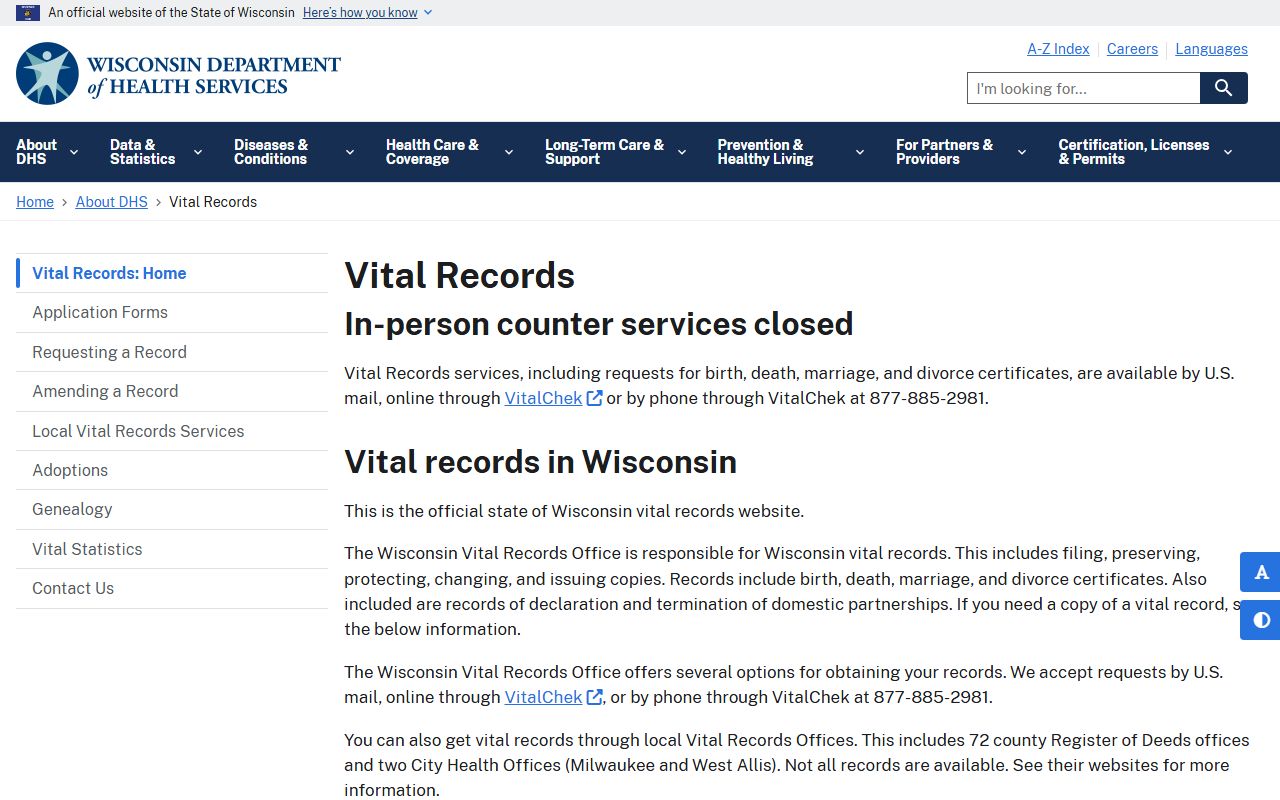
It is the clearest starting point when the death occurred after the statewide handoff in October 1907.
The Wisconsin Historical Society pre-1907 vital records index shows the older side of the Wisconsin Death Index and why county history still shapes record access.
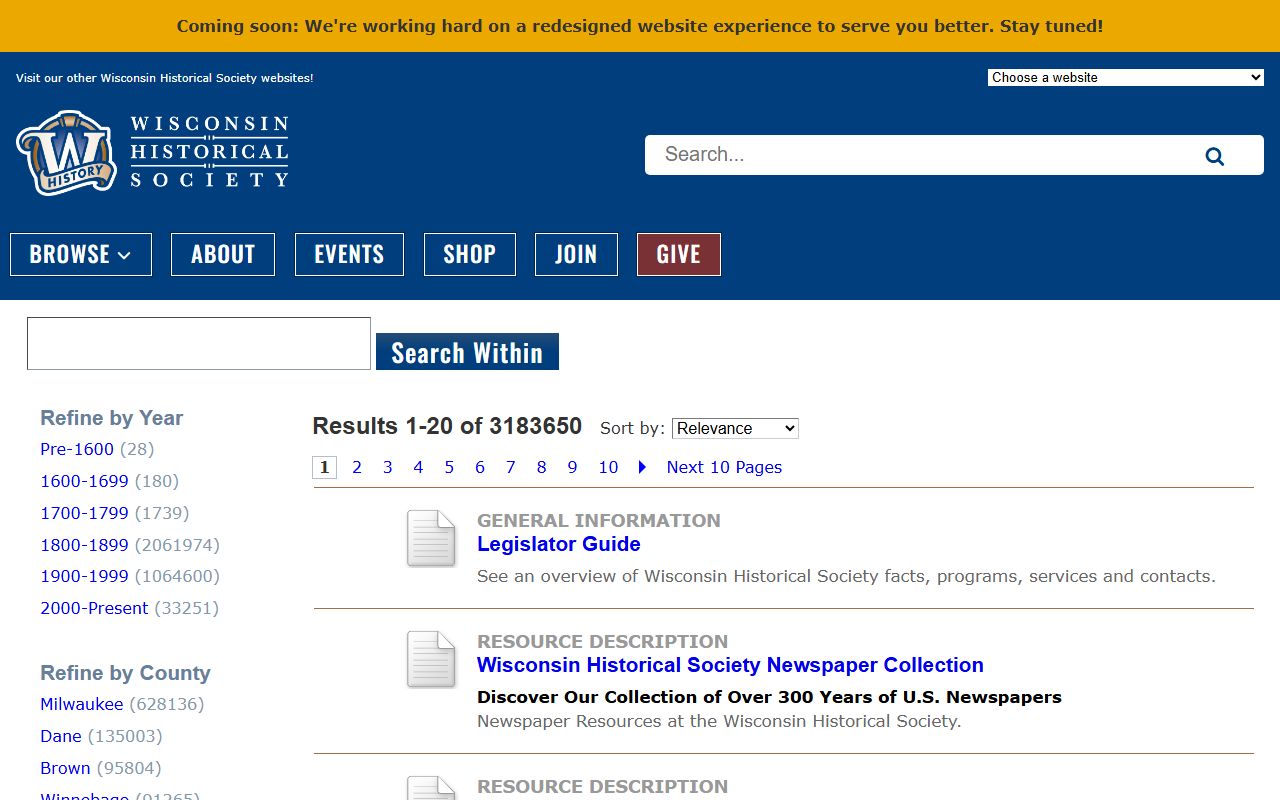
For family history work, this index often gets you to an early county death record faster than a general web search.
Search Wisconsin Death Index By Date
The date of death drives the whole process. If the event happened before October 1, 1907, search the Wisconsin Genealogy Index first, then follow up with the county that created the original record. If the death happened after that date, start with the state office or a local issuing office that can process the request. Wisconsin does not publish the state genealogy room records as a general online statewide database, so many searches still depend on office records, index tools, and certificate requests instead of a single free portal.
That split also affects what you can expect to receive. A pre-1907 Wisconsin Death Index result may point you to an old county register entry or a microfilmed copy at the Historical Society. A modern request may produce a certified copy, a fact-of-death form, or in some cases an extended fact-of-death copy, depending on eligibility and the record date. The research is not hard once the timeline is clear. The main risk is using the wrong office for the wrong year.
If you are not sure where to begin, use this order:
- Confirm the death year and county or city if you know it.
- Use the Wisconsin Historical Society for pre-1907 index searching.
- Use the Wisconsin DHS vital records office for 1907 to present requests.
- Check the local Register of Deeds when county access is part of the search.
- Use local library and genealogy collections when the index trail goes cold.
The Library of Congress Wisconsin vital-records guide is useful because it spells out the county-to-state break in one place.
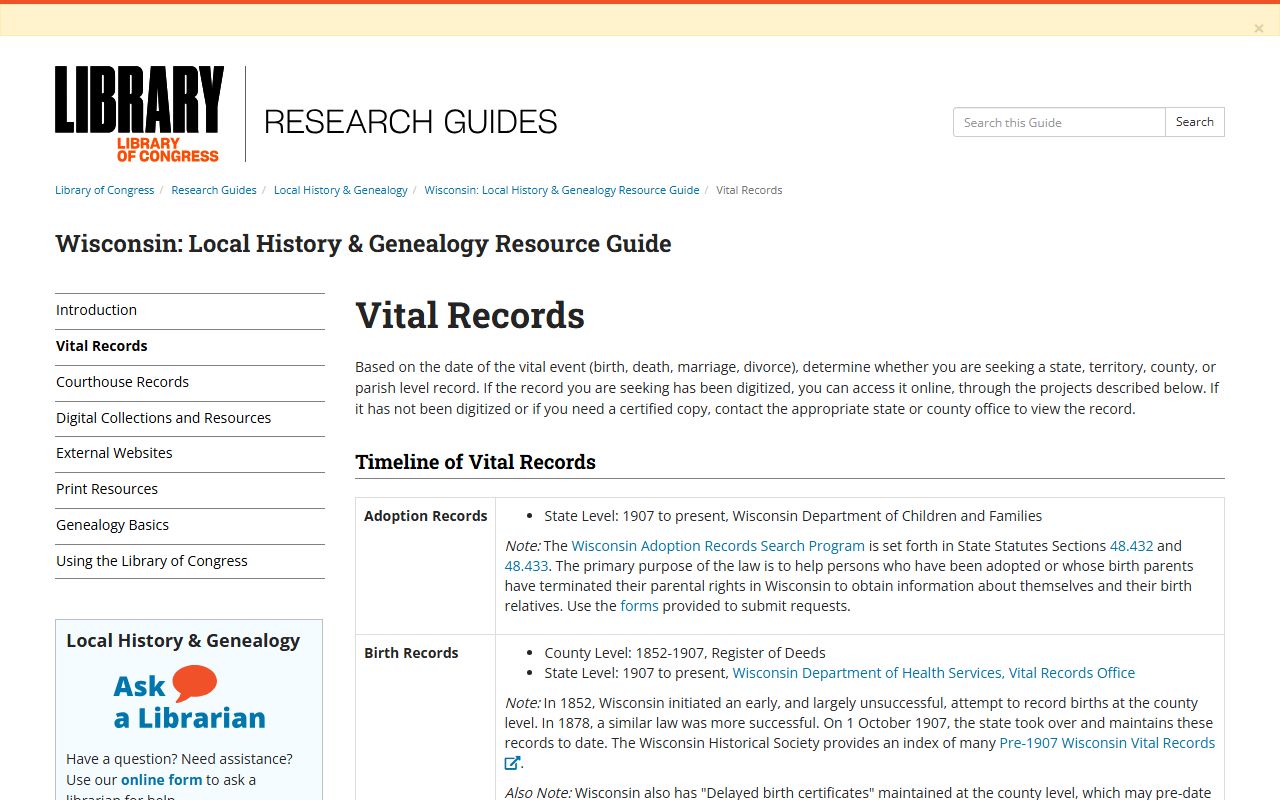
That guide helps explain why some Wisconsin Death Index searches end at a county office while others move through the state system.
Wisconsin Death Index Copy Rules
Search access and copy access are not always the same. Wisconsin law limits who can receive certain death-record copies for post-1907 events. The research in the state certified-copy guidance says eligible requesters include immediate family, legal representatives, authorized agents, and people who can show a direct and tangible interest. That is why many Wisconsin Death Index searches end with a second step. You may locate the death, but you still have to prove eligibility before the office issues a certified copy.
The statute framework in Wisconsin Statutes Chapter 69 shapes the process. The disclosure rules summarized in section 69.20 limit inspection and issuance for more recent records. The copy rules summarized in section 69.21 explain how certified copies are issued and why the form of the record can change based on the death year. For deaths after August 31, 2013, Wisconsin uses a fact-of-death form unless the requester qualifies and asks for extended fact-of-death information. That difference matters if you need cause-of-death details.
The state also asks for identification. A current driver's license, state ID, passport, or military ID works, and mailed requests need a clear copy of the ID. The application should include the decedent's full name, date of death, county or city of death, and the requester's relationship. If the office cannot match the request to a valid record or the eligibility showing is weak, the request can stall. A precise Wisconsin Death Index search usually leads to a smoother certificate request.
Wisconsin Statutes section 69.20 is one of the cited access rules behind disclosure limits for modern Wisconsin death records.
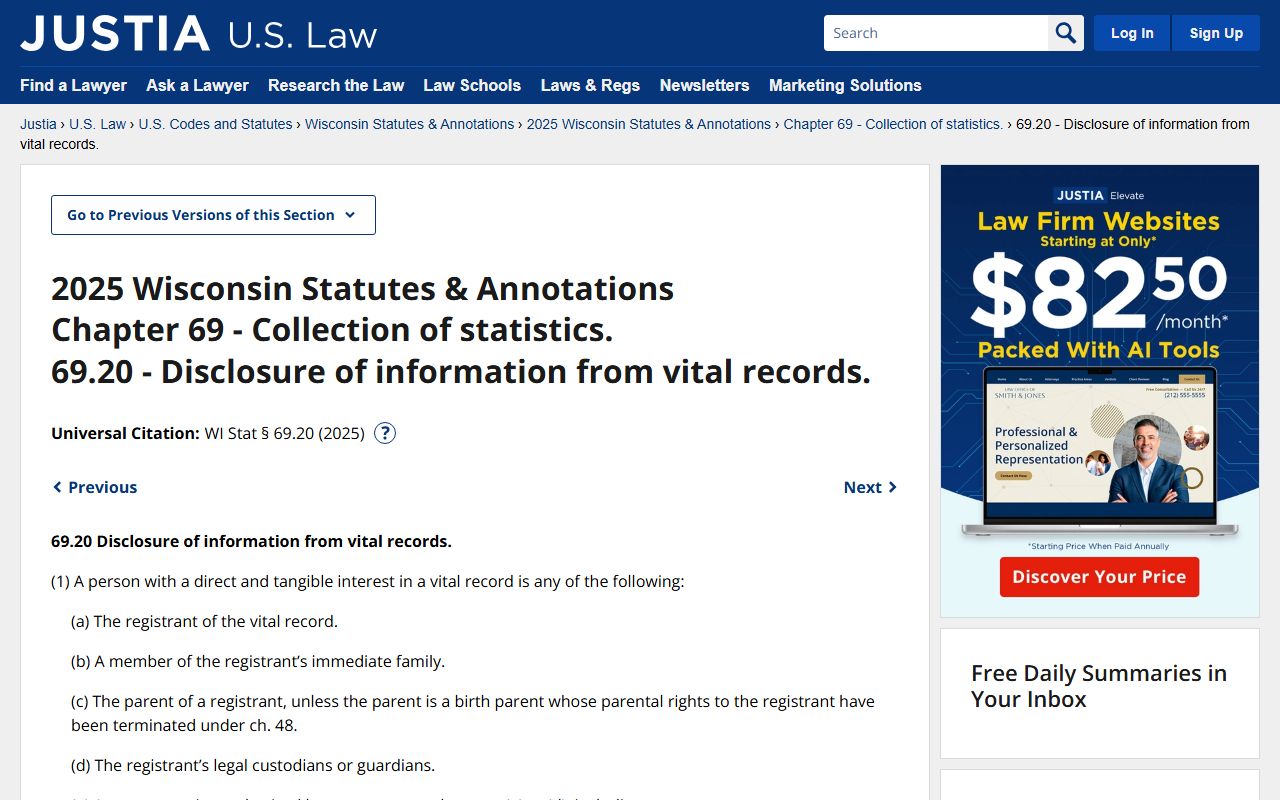
It explains why an index result does not always mean every record detail is open to every requester.
Wisconsin Statutes section 69.21 addresses copies and helps frame what type of death record a Wisconsin office can issue.
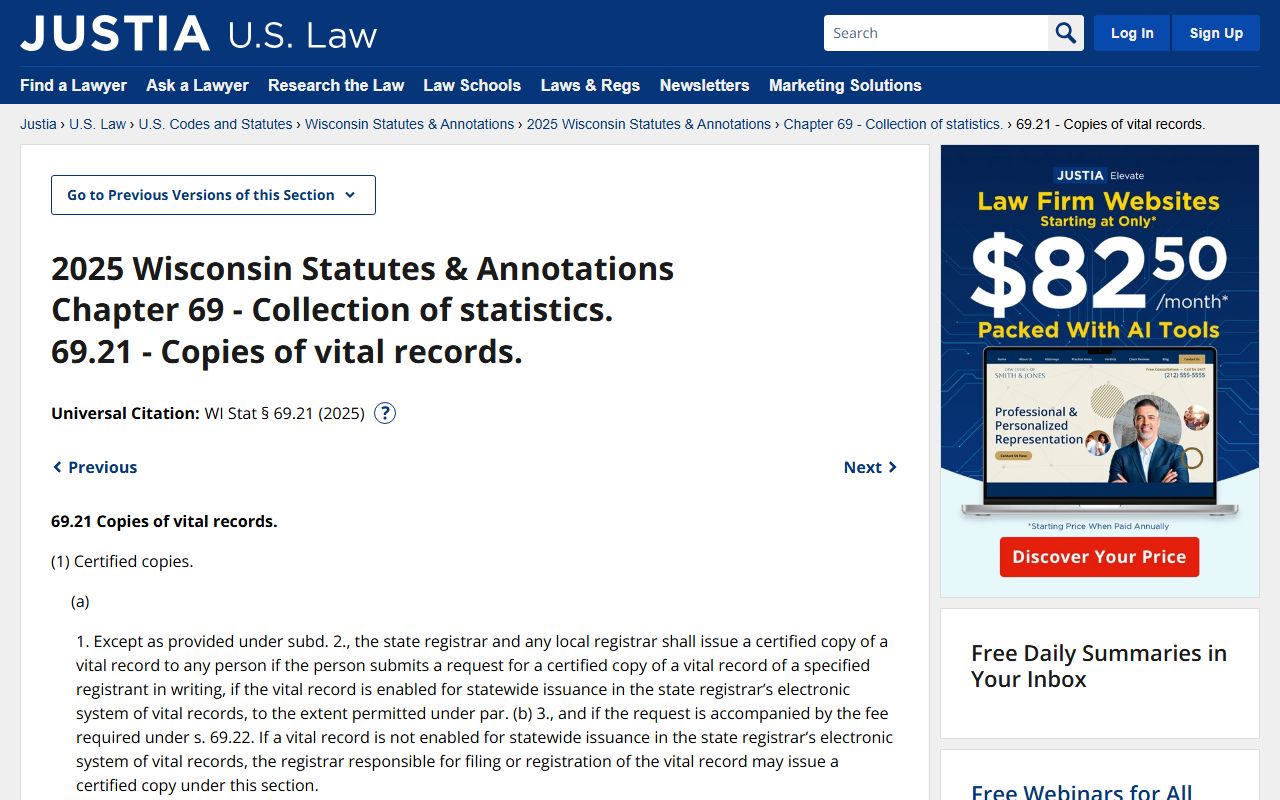
That makes it useful when you need to understand certified copies, fact-of-death forms, and extended information requests.
Get Wisconsin Death Records
Wisconsin gives you several request paths. Mail works. Local office service works. Online and phone ordering run through VitalChek, the state's authorized vendor. The state research says online and phone orders are often completed in about five business days after the request is received, while mail requests can take longer. The first certified copy is generally $20, and each additional copy of the same record ordered at the same time is $3. Those are state-level terms, and vendor processing fees can add to the online route.
There is a practical reason many people use the online path. Once you already know the name, date, and location from a Wisconsin Death Index search, online ordering can be the shortest route to a certified record. Mail still works well for planned requests, especially when you want to send a clear paper trail with your ID copy and explanation of eligibility. Local offices help when you need a county or city touchpoint, but record coverage can vary by place and year. Wisconsin itself says not all records are available through each local office.
The Wisconsin VitalChek ordering page is the state's authorized online ordering channel for many modern death record requests.

It matters most after you have already pinned down the record details and need a faster ordering path than mail.
Note: Local issuing access can differ by county, so confirm office coverage before relying on one location for a modern Wisconsin death certificate.
Wisconsin Death Index Genealogy Search
The genealogy side of the Wisconsin Death Index is strongest in the pre-1907 era. The Wisconsin Historical Society says its pre-1907 index contains more than 430,000 death index records, and the searchable fields can go well beyond a simple name-and-date listing. Depending on the record, you may see burial details, parents' names, residence, occupation, cause of death, birthplace, undertaker, and permit references. That depth is what makes early Wisconsin death records useful for both family reconstruction and local history.
The state genealogy research room adds another path when the online trail is not enough. Wisconsin DHS requires appointments for in-person genealogy research, and the research file says those sessions are available Monday through Friday from 2:00 p.m. to 4:00 p.m. The office also lists ID rules, registration requirements, and limits on what you can bring into the search area. For death records, the genealogy room covers the earliest filed records through 1971 and 50 years from today's date, with indexes through 2016. That is a narrow but important lane for deep Wisconsin Death Index work.
The Wisconsin DHS genealogy appointment page outlines the in-person research rules, time window, and identification requirements.
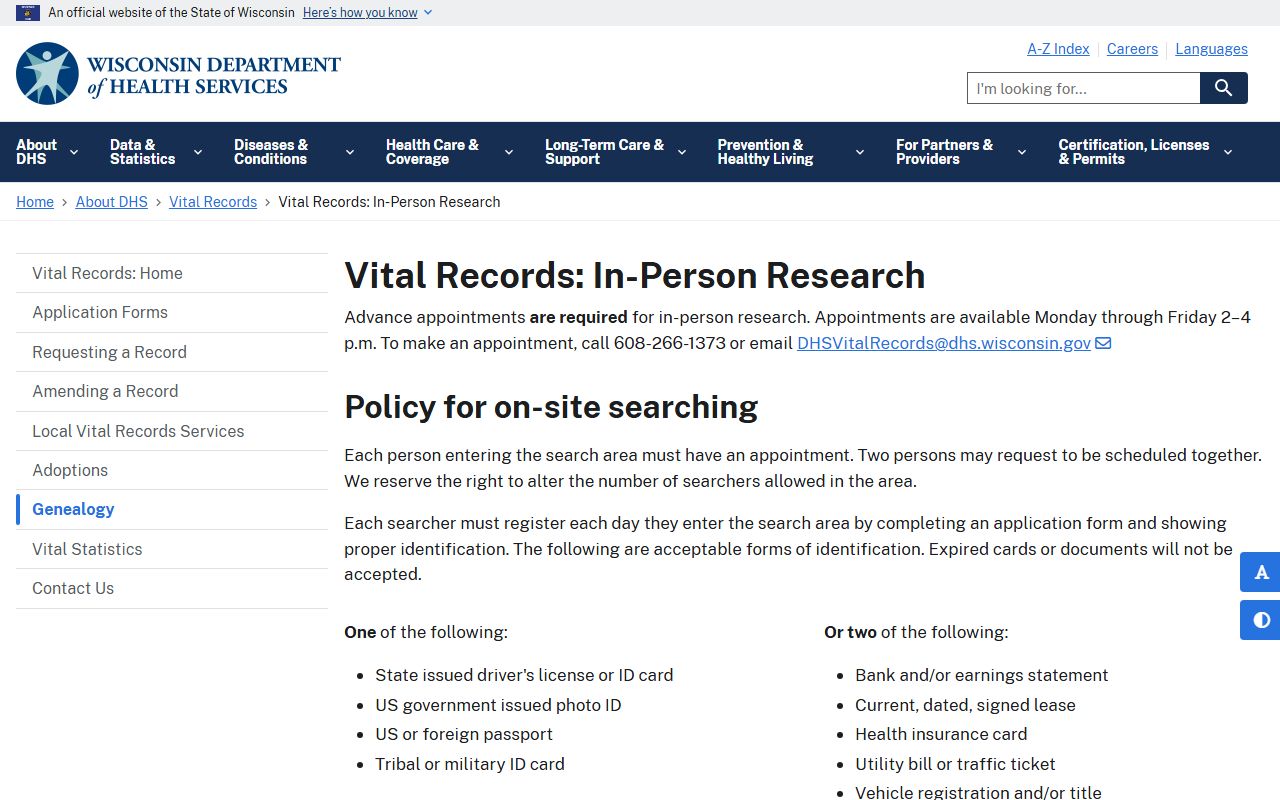
It is especially useful when the online Wisconsin Death Index path gets you close but not far enough.
Wisconsin Death Index Record Details
Not every Wisconsin death record shows the same set of facts. Chapter 69 explains how the state treats the record itself, and the research on section 69.18 shows how death records are registered, certified, and completed. That section covers the roles of funeral directors, physicians, coroners, and medical examiners. It also explains deadlines for filing and medical certification. Those rules matter because they shape the quality and timing of the information that later appears in the Wisconsin Death Index and in certified death-record copies.
For older records, the Wisconsin Historical Society says you may find details such as maiden name, race, age, parents, place of death, place of burial, undertaker, and causes of death. For newer records, the form can narrow depending on disclosure rules and the type of copy issued. If your search goal is burial research, probate preparation, insurance follow-up, or family history, ask for the right form. A Wisconsin Death Index hit is the start. The next step is making sure the record type you request matches the information you actually need.
Wisconsin Statutes Chapter 69 provides the official statewide framework for registration, maintenance, and issuance of death records.
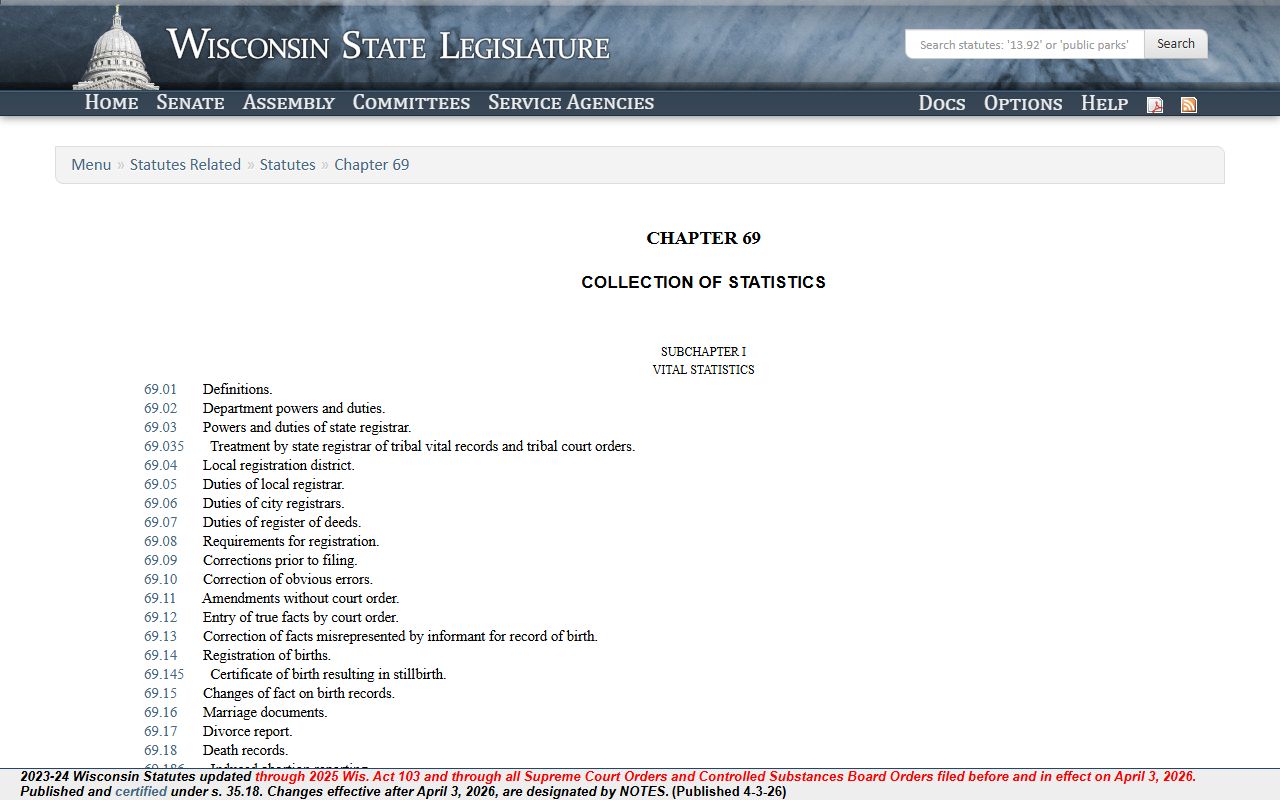
It helps explain why Wisconsin death records can differ by date, form, and issuing office.
The cited section 69.18 death-record reference focuses on the filing and certification steps behind the record.
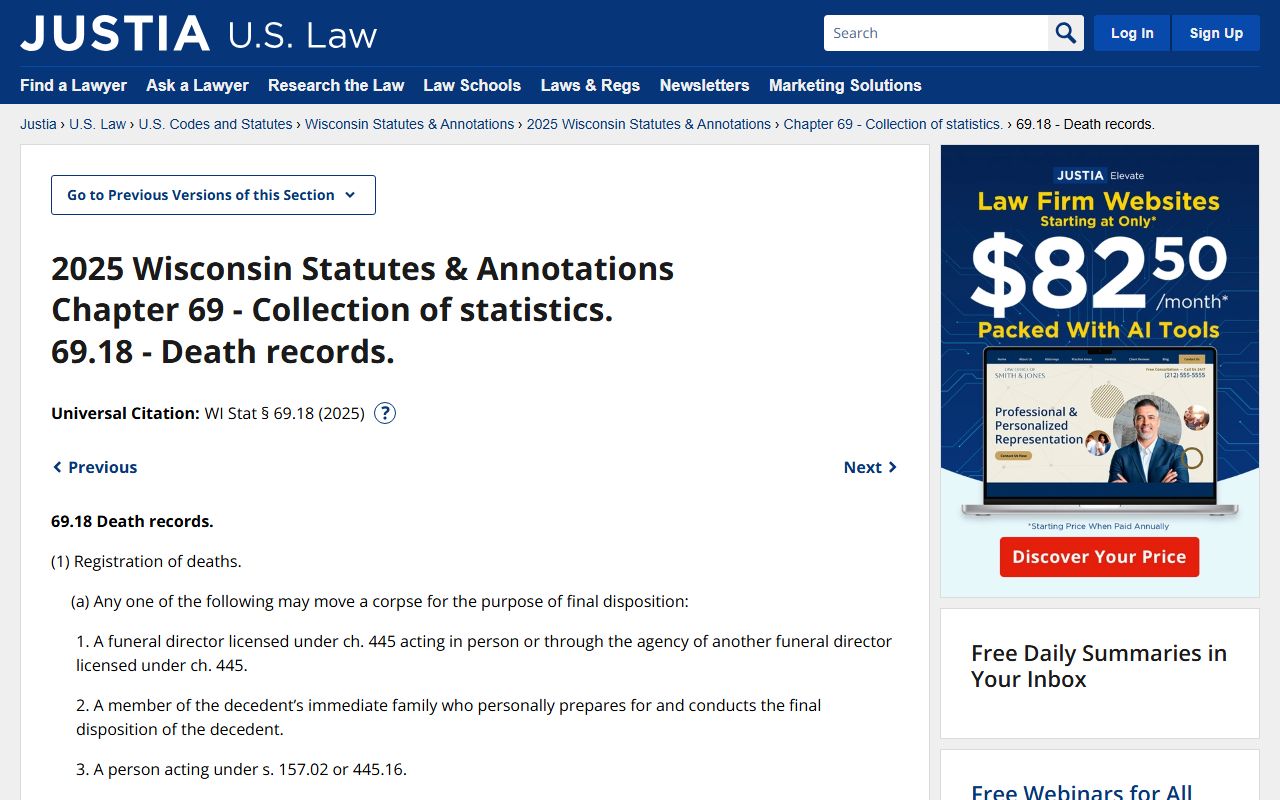
Those filing rules help explain why cause-of-death and certification fields appear the way they do in later copies.
Wisconsin Death Index Local Research
Many searches still turn local. County Registers of Deeds remain important for early deaths, and Wisconsin says local offices can provide record access in many cases. Public libraries and history collections matter too. The state research guide notes that Ancestry Library Edition and similar tools are often available through libraries, while county and city collections may hold cemetery records, local newspapers, and directories that fill gaps left by a basic index search. That is why this site breaks Wisconsin Death Index help into county and city pages instead of treating the whole state as one workflow.
The next step is to narrow your search to the county or city tied to the death. That helps you match local offices, images, and county-specific timelines. Brown County, for example, has some of the oldest death records in Wisconsin. Other counties did not begin consistent death record keeping until much later. This site's county and city pages use that local research to point you toward the right office, local image sources, pre-1907 holdings, and supporting history collections.
Browse Wisconsin Death Index Counties
Use the county pages to find local Wisconsin Death Index guidance, county record dates, Register of Deeds access points, and county-specific images drawn from the research set.
Wisconsin Death Index City Pages
Use the city pages to find local death-record offices, county relationships, and city-specific research for major Wisconsin communities.