
Search Brown County Death Index
The Brown County Death Index reaches back to the county record era, so it helps with both family history and record requests. Brown County kept death records long before the state took over in October 1907, and the county register of deeds still serves as the first stop for many older entries. If you are checking a name from Green Bay or another Brown County place, start with the local office, then move to the Wisconsin Historical Society or Wisconsin DHS for later records.
Brown County Death Index Overview
Brown County Death Index Offices
The Brown County Register of Deeds maintains Brown County vital records and handles death record requests at the Brown County Courthouse in Green Bay. The office says Brown County death records date back to 1834, which makes them some of the oldest records in Wisconsin. Requests can be made in person, by mail, or online through approved vendors, so you can choose the path that fits your trip, timeline, and need for a certified copy.
The county clerk is the next place to check when you need general vital-record guidance. The Brown County Clerk page gives another county contact point for record help, and that matters when a search turns up a name but not the exact copy you want. In a county with a deep paper trail, one office may point you to another office fast.
The Brown County Death Index is useful because the county office knows the local filing path. If a death happened before the state cutoff, the county can be the right source. If the record is newer, the clerk and register of deeds pages still help you sort out where the copy should come from and what request method is best.
The Brown County Register of Deeds page is the best first check for local copies, and it also shows the office that serves the courthouse records desk.
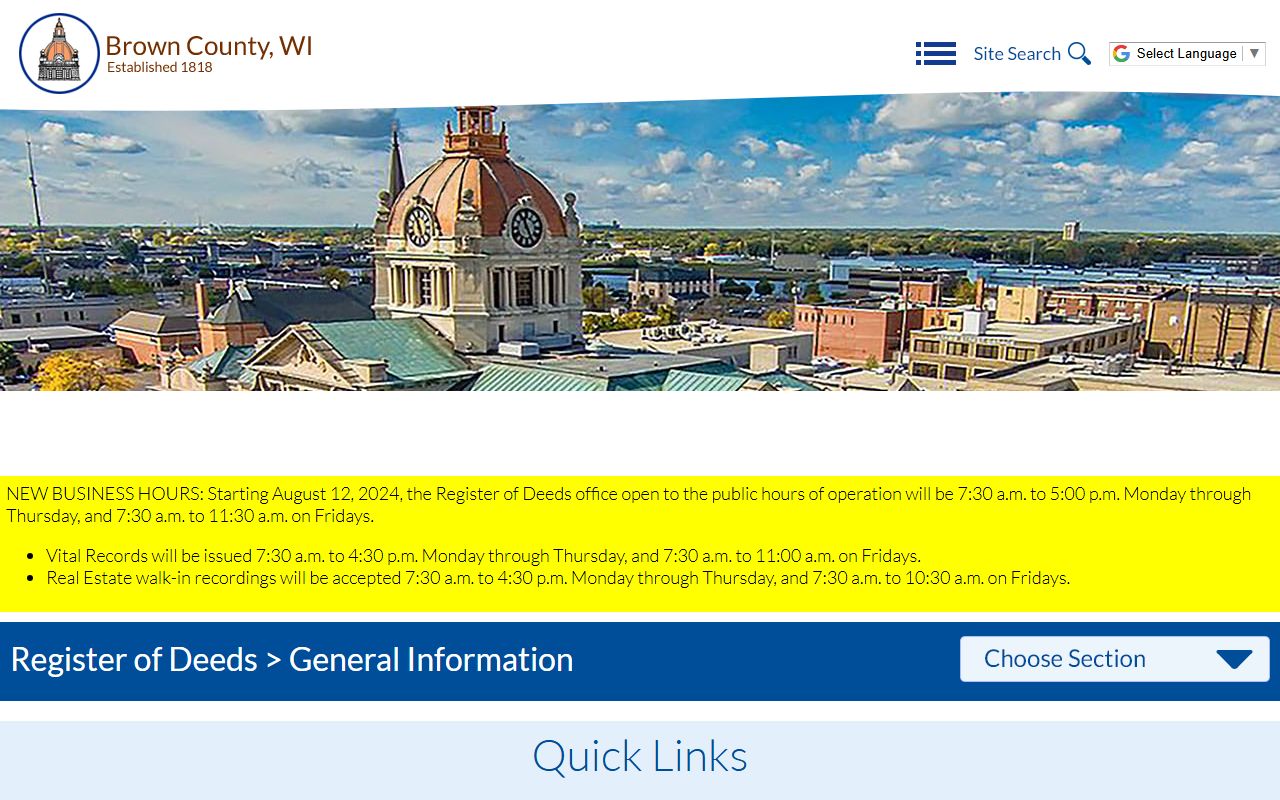
That office is the clearest path for older Brown County death records and for requests that need local handling.
The Brown County Clerk page adds a second local contact when you want direction before you order.
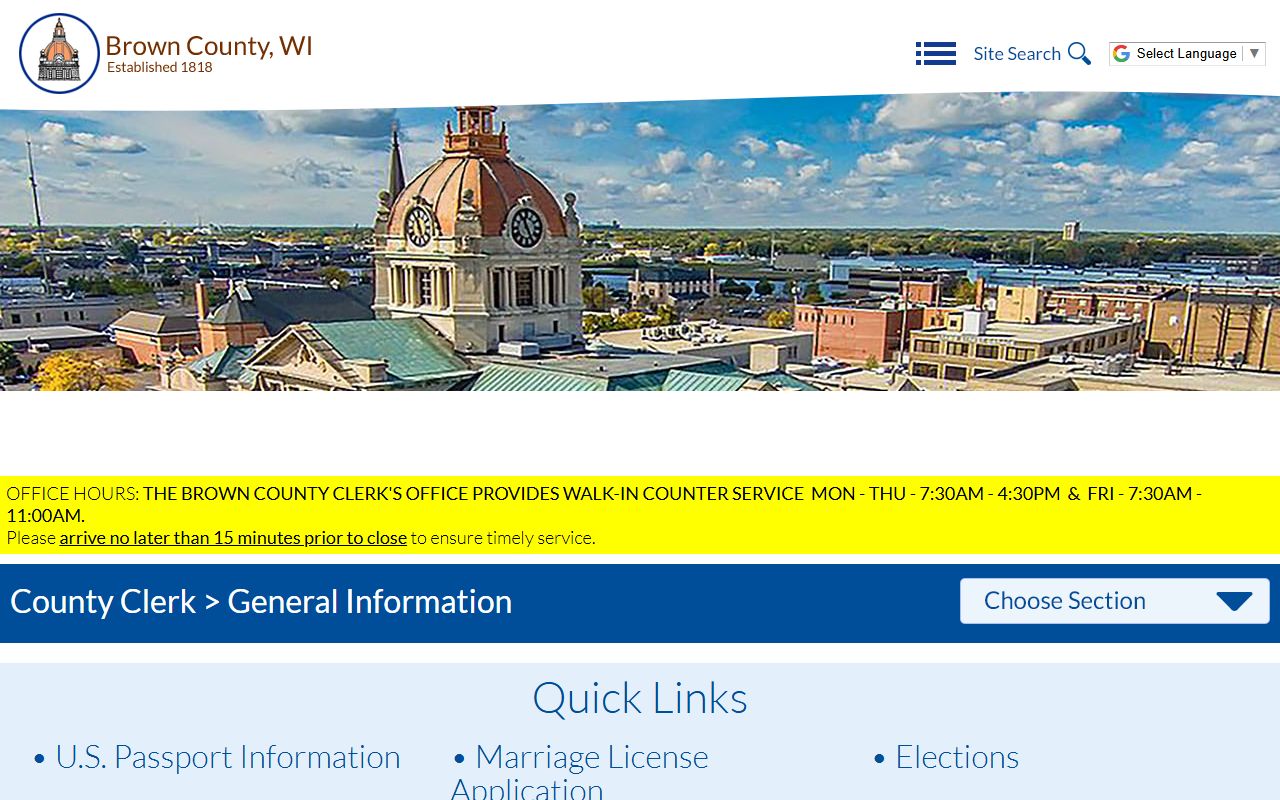
That matters when you are sorting out where a county death copy lives and which office should answer first.
Brown County Death Index Before 1907
For older Brown County deaths, the Wisconsin Historical Society is a key source. The society's pre-1907 vital records index lets you filter by county, and it is the best statewide place to look when the county office points you toward a historical entry. Brown County also has long-running local registers and microfilm coverage, so a search can surface a name even when the county file is not in modern state format.
Brown County has one of the longest death-record runs in Wisconsin. The county was organized in 1818, before Wisconsin became a territory, and Green Bay is known as the oldest settlement in Wisconsin. That long history explains why Brown County death records can stretch far back and why the Brown County Death Index often reaches beyond the years that most people expect.
Brown County Library is also useful when a name is hard to pin down. Its genealogy and local history page points to local history material, newspapers, city directories, cemetery records, and Ancestry Library Edition access. Those sources can confirm spelling, place names, burial clues, and family links before you request a copy.
When you search the Brown County Death Index, local history can make a small clue turn into a usable record path.
- Local history material
- Newspapers and obituaries
- City directories
- Cemetery records
- Ancestry Library Edition access
If you have only a rough year, the library tools can narrow the search fast. A burial notice or city directory entry can point you to the right decade before you order a certified copy.
Brown County Death Index and State Records
After October 1, 1907, Wisconsin DHS became the state home for death records. The Wisconsin DHS Vital Records page explains that the office files, preserves, protects, changes, and issues copies of state records. It also notes that requests can go by mail, by phone through VitalChek, or online through approved channels. If your Brown County Death Index search leads into the state era, this is the next office to use.
The state office does not publish its own records or indexes online, so the genealogy appointment page matters. In-person genealogy research is by appointment only, Monday through Friday from 2 to 4 p.m. Searchers must bring ID, register each day they enter, and follow the office rules on what can be carried into the search area. Death records are available in person through 1971 and 50 years from today, which keeps newer records off the open search shelf.
When you need a certified copy, Wisconsin Statutes Chapter 69 and the DHS request rules control who can get it and what it contains. The Wisconsin Statutes Chapter 69 page covers the legal structure for vital records, while the DHS certified copy page explains that a death certificate costs $20 for the first copy and $3 for each extra copy of the same record ordered at the same time.
The VitalChek Wisconsin page is useful when you want an online route for a state death certificate. If you are checking whether the death record belongs at the county or state level, the Library of Congress guide gives the clean break: county death records are generally the path for 1852 to 1907, and state records cover 1907 to the present.
Note: For a Brown County Death Index search, start with the county office for older deaths and move to DHS only when the date falls after the state cutoff.
Brown County Death Index Research Help
Brown County has more than one place that can help when the name is hard to match. The Wisconsin Register of Deeds Association explains how county register of deeds offices fit into the statewide vital-record system, and the Wisconsin State Law Library collects useful legal and research links around Chapter 69 and other vital-record topics. Those pages help when you want to understand which office should have the copy and why.
The Brown County Death Index also connects well with statewide genealogy tools. The FamilySearch Brown County guide can help you compare county clues with family lines, while the Wisconsin Historical Society index stays strong for older Wisconsin deaths. If you are working from a burial card, newspaper line, or family story, those resources can turn the clue into a request that the office can actually fill.
Brown County Library and the county offices fill different jobs. The library helps you build the trail. The register of deeds and clerk help you close it out with the right copy. That is the fastest way to use the Brown County Death Index without wasting time on the wrong office or the wrong date range.
Brown County also stands apart because its death records begin in 1834, long before many Wisconsin counties kept a steady run of local records. That depth is why the Brown County Death Index can be useful for early Green Bay families, territorial-era research, and local history work that reaches well before the 1907 state split. If you have a nineteenth-century name to place, Brown County deserves a slower and more careful search than a routine county lookup.