
Buffalo County Death Index Records
The Buffalo County Death Index is the right place to start when you need a county death record or a clear path to the state copy. Buffalo County death records begin in 1873, so the index can help with older local searches that stop well before the state took over in October 1907. If you are tracing a death along the Mississippi River or in one of the county communities, start with the county office in Alma and then move to Wisconsin DHS when the date falls in the state era.
Buffalo County Death Index Overview
Buffalo County Death Index Offices
The Buffalo County Register of Deeds maintains Buffalo County vital records and handles death record requests at the Buffalo County Courthouse in Alma. The county says death records date back to 1873, and that gives the Buffalo County Death Index a long local run for family research. Requests can be made in person or by mail, which makes the office useful whether you live nearby or are pulling a record from out of state.
Buffalo County government also matters because the county keeps general services in one place and points residents toward the right office. The county is established along the Mississippi River, and its official website is the best place to verify the current path to county records. When a death search turns into a record request, the county site helps you confirm where to send the form and what to expect when you arrive.
The Buffalo County government website is the right place to start when you want the local record path and the right office name.
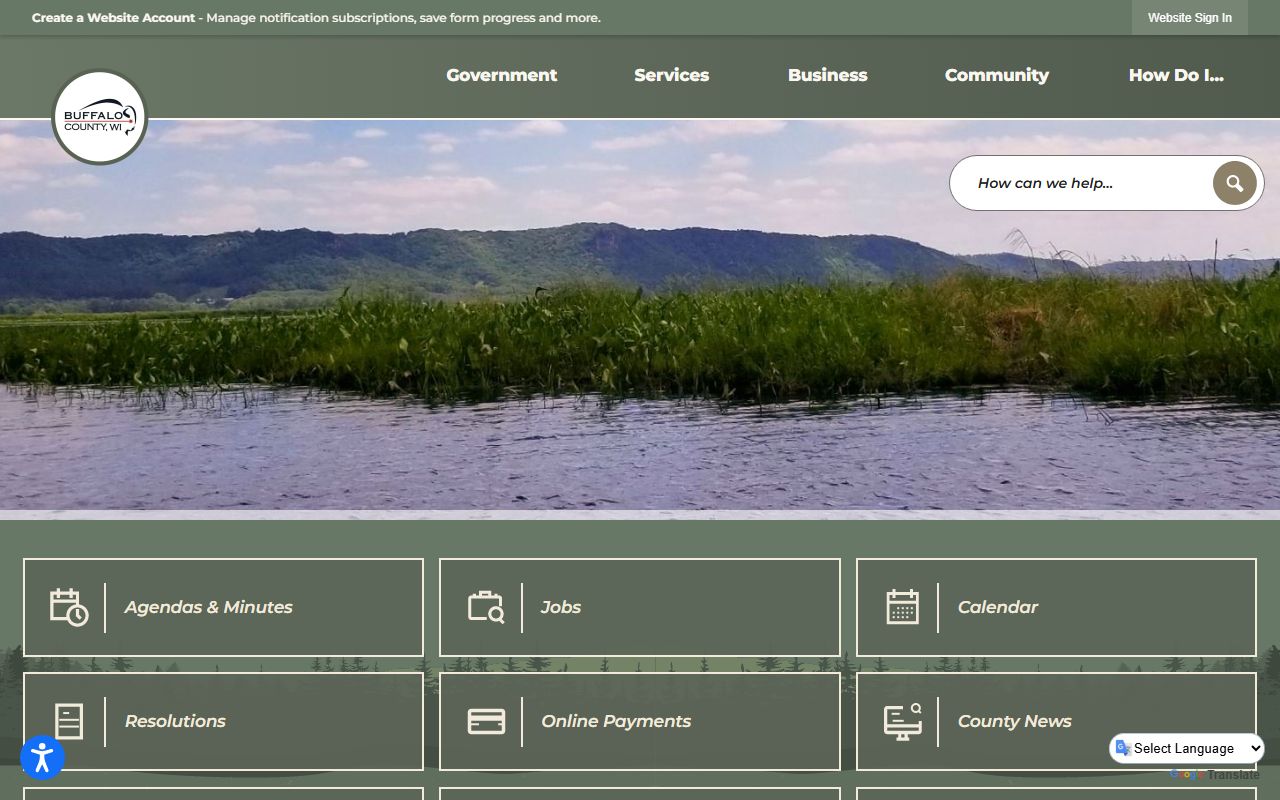
That county page is useful when you need the official office, the courthouse location, or a place to begin a mail request.
The Buffalo County Register of Deeds page is the office to use for county death records, and it is the clearest local source for the Death Index.
Buffalo County Death Index Before 1907
For older Buffalo County deaths, the Wisconsin Historical Society is the main statewide research aid. The Wisconsin Historical Society pre-1907 index can be filtered by county, and the historical society notes that Buffalo County deaths begin in 1873 in the Wisconsin Genealogy Index. That makes the Buffalo County Death Index a strong starting point for pre-state deaths and a good bridge to local courthouse records.
Buffalo County was established in 1853, which means the county record trail has depth even when the state index is not enough by itself. The county's Mississippi River setting also helped local families move through river towns and farm areas, so it is smart to search for place names as well as surnames. A death entry may be easier to spot when you know whether the family lived near Alma, a river landing, or another county community.
FamilySearch can help when you need county hints or want to compare what the index shows with other record sets. The Buffalo County FamilySearch guide is not the first stop for a certified copy, but it can help you shape the search and find related records that point back to the death entry.
If the county index gives you only part of the answer, the state guide and the local office often fill the gap.
The county's river setting also means place names can matter as much as surnames. If a family moved by water, farmed near the county edge, or buried a relative outside the home town, a Buffalo County Death Index search may need nearby county checks before it resolves. That is a local search pattern, not a mistake, and it fits the Buffalo County record history described in the research.
Buffalo County Death Index and State Records
After October 1, 1907, Wisconsin DHS became the main home for death records. The Wisconsin DHS Vital Records page explains that the office files, preserves, protects, changes, and issues copies of state records. It also notes that requests can go by mail, by phone through VitalChek, or online through approved services. For newer Buffalo County deaths, that state path matters just as much as the county office.
The genealogy appointment page is the best guide if you need in-person help. Appointments are required Monday through Friday from 2 to 4 p.m., and each searcher must show proper identification and register on the day of the visit. Death records are available in person through 1971 and 50 years from today, so the office keeps a firm line between open genealogy access and newer restricted records.
When you need a certified copy, Wisconsin Statutes Chapter 69 and DHS rules shape the request. The Wisconsin Statutes Chapter 69 page covers the legal structure for vital records, while the DHS certified copy guidance explains the $20 first-copy fee and the $3 fee for extra copies. That is the part of the Buffalo County Death Index process that matters when you want a usable certificate instead of just an index hit.
The VitalChek Wisconsin page is useful when the state copy needs to be ordered online. If you are not sure whether the record belongs at the county or state level, the Library of Congress guide gives the rule of thumb: county death records generally cover 1852 to 1907, and state records cover 1907 to the present.
Note: For Buffalo County Death Index work, the county office is the best starting point for 1873 through 1907 records, while DHS takes over after the state cutoff.
The state image below shows the official Wisconsin DHS death-records page that handles the later records path.
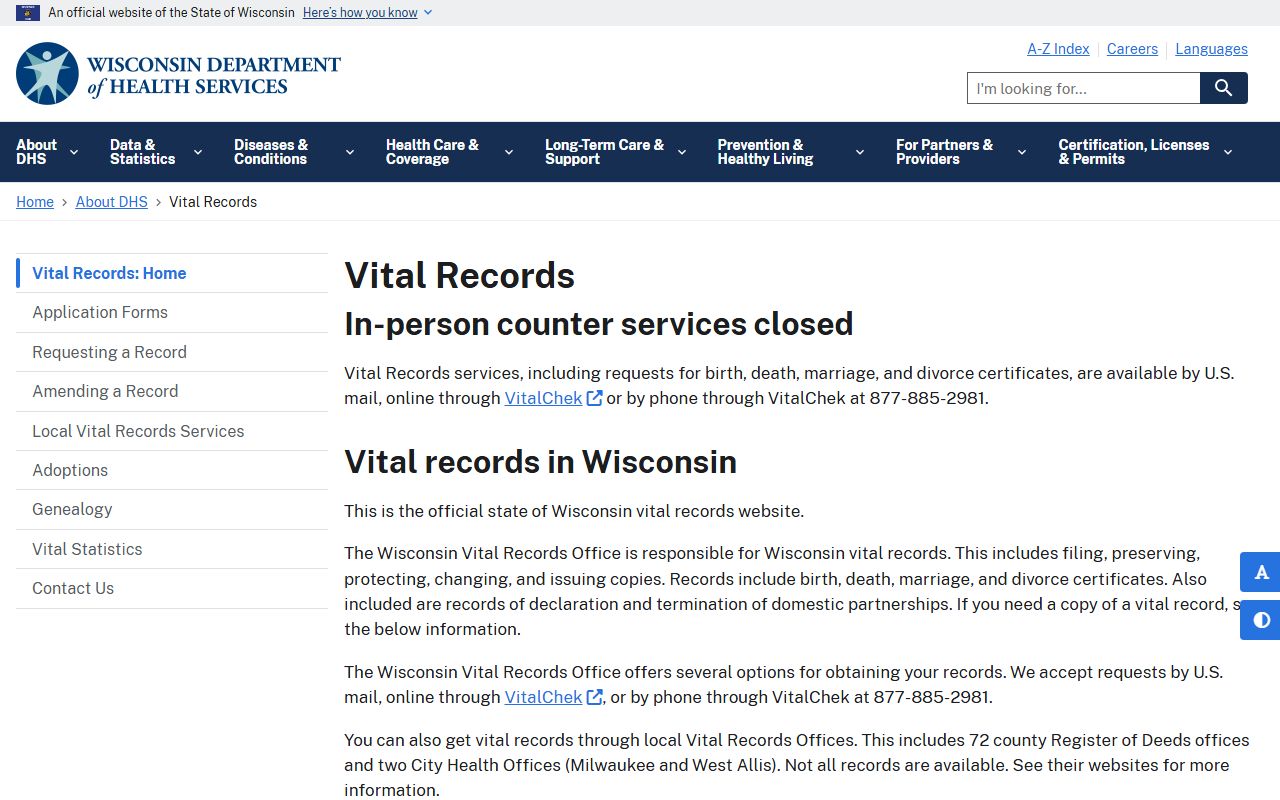
That state office is the key step for post-1907 Buffalo County deaths and for certified copies ordered through the state system.
Buffalo County Death Index Research Help
Buffalo County research gets easier when you pair the county index with statewide tools. The Wisconsin Register of Deeds Association explains how county register of deeds offices fit into the statewide vital-record system, and the Wisconsin State Law Library gives legal and research links around Chapter 69 and other vital-record topics. Those pages help when you want to understand why one office has the record and another office sends you onward.
The Buffalo County Death Index also works well with local place research. If a death is not obvious in the index, check river towns, township names, and family burial clues before you order. The county office can confirm the record path, and the Wisconsin Historical Society can help you test the pre-1907 timeline. That mix of county, state, and local clues is often enough to turn a partial lead into the right certificate request.
Buffalo County does not need a complicated search plan. Start with the county office, check the historical index, then move to DHS when the date lands after 1907. That sequence keeps the Buffalo County Death Index search tight and helps you avoid dead ends.
Buffalo County's setting along the Mississippi River is more than local color. It is a real search clue. River trade and travel could place a death in a nearby community even when the family home was elsewhere in the county. If a Buffalo County Death Index search misses the first time, keep Alma, nearby river towns, and neighboring counties in view. That kind of local context often explains why a record turns up one county over.