
Ashland County Death Index Access
Ashland County Death Index records begin in 1877, so the county office and the Wisconsin Historical Society both matter when you start a search. Older entries stayed at the county level before the state took over in October 1907, while later records moved into the state system. If you need a death date, a certificate number, or a certified copy, begin with the right date range and the right office. That simple split makes the search easier and keeps you from chasing a record in the wrong place.
The Wisconsin Historical Society's pre-1907 vital records index is a strong fit for Ashland County because it helps bridge the gap between the county books and the later state files.
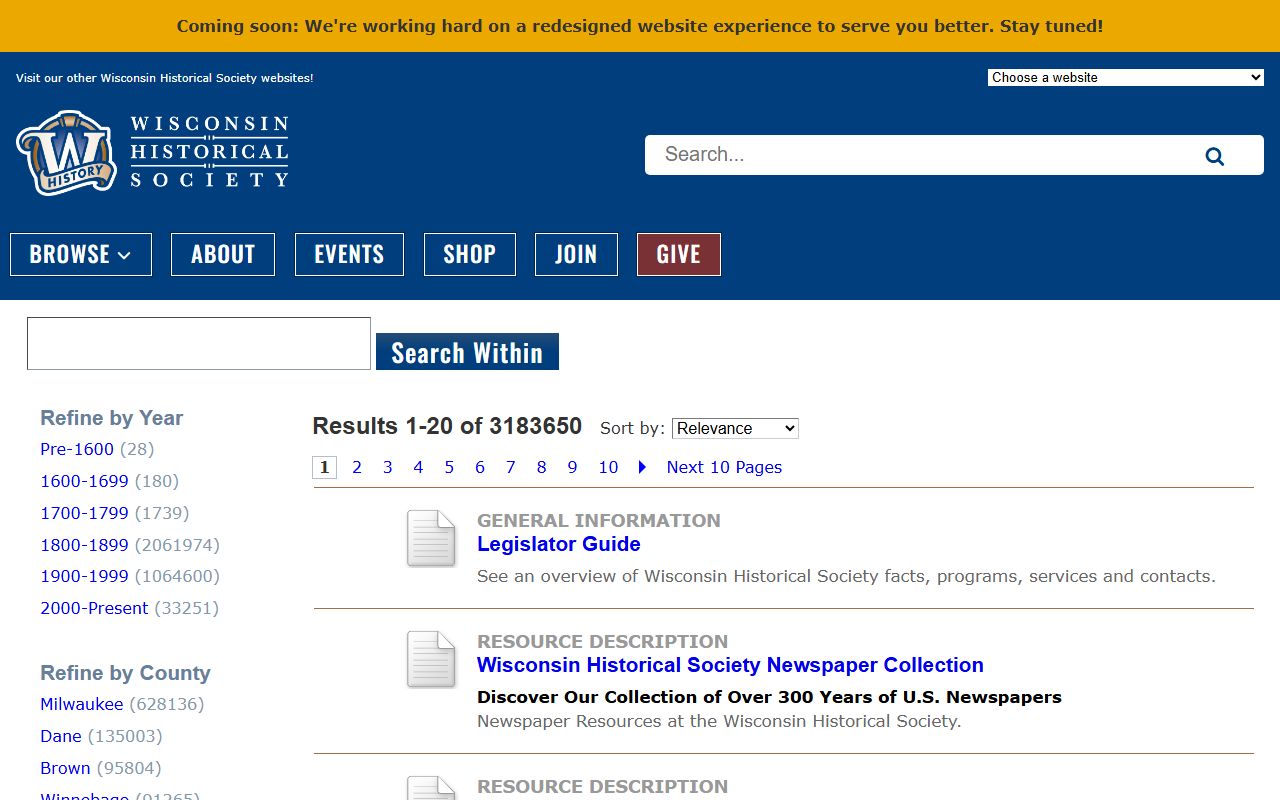
Ashland County death records start in 1877, so the early index can be especially useful when the county office has only part of the story. The state image below points you to the historical records path that often gives the first usable lead.
Ashland County Death Index Sources
Ashland County death records date back to 1877, which makes the county office the first stop for early Death Index work. The Register of Deeds maintains Ashland County vital records, and the courthouse office in Ashland handles the local set. Those county records cover the period before October 1, 1907. After that point, the state Vital Records Office is the better source for certified copies and later death records.
The Wisconsin Historical Society pre-1907 vital records index is useful because it lets you search older Ashland County death entries online. The Society also keeps microfilm copies in Madison, which can help when the online index gives you only part of the answer. The Library of Congress guide matches that same county-to-state time line and is a good check when you want to confirm where a record should live.
The main search rule is still simple. County-level Death Index records are the older ones, and state-level records start with the October 1907 system. If you keep that date split in mind, you can move straight to the right office and avoid broad requests that do not fit the record you need.
Ashland County Register of Deeds
The Ashland County Register of Deeds keeps the county vital records and works from the Ashland County Courthouse in Ashland. That is the place to ask for local certified copies and for early Death Index entries that stayed in the county file. If you are searching a record from 1877 through September 1907, this office is part of the path you should follow first.
Requests are accepted by mail and in person, and some records may also be available through approved online vendors. That gives you a few ways to search, which helps if you live far from Ashland or you need the record fast. The Ashland County Clerk can also help with some vital-record matters and may be useful when you have a historical question or a court-order issue.
As with every Wisconsin death record office, the county works within Chapter 69 of the Wisconsin Statutes. The access rules in section 69.20 limit who can receive a post-1907 copy, and section 69.21 explains how certified copies are issued. That is why the office may ask for ID and proof of interest before it releases a record.
Ashland County Death Record Rules
For deaths from October 1907 forward, the Wisconsin Department of Health Services is the state office to use. Its Vital Records Office files, preserves, and issues those records. You can request them by mail, through VitalChek, or by phone. That is the normal route for later Ashland County Death Index entries that are no longer handled mainly at the county office.
The state also offers in-person genealogy research by appointment. Searchers bring an application, accepted identification, and the fee. Staff can answer questions and explain the process, but they do not search for you. If you need a certified copy, the first copy costs $20 and each additional copy of the same record costs $3.
Section 69.18 explains how death records are filed, which is useful when you are trying to understand why an early index entry may look different from a later certificate. The county index, the state certificate, and the historical society index may each hold a different piece of the story, so matching the date range before you order is the best way to keep the request focused.
Ashland County Death Index History
Ashland County was established in 1860, and that background helps explain why the county's death records begin in 1877 instead of much earlier. Families tied to lumbering, mining, and Lake Superior shipping may leave traces in more than one county record set, especially near county borders. The research file specifically points to Bayfield, Iron, Price, and Sawyer as nearby counties worth checking when an Ashland County Death Index search comes up short. That is not filler. It is a practical search rule for this part of Wisconsin.
The county clerk can also matter in a narrow but useful way. While the Register of Deeds is still the main office for death records, the Ashland County Clerk may help with delayed registrations, court-order questions, and other older record issues that do not fit a routine request. For a careful Ashland County Death Index search, that means the courthouse can offer more than one local doorway. Start with the Register of Deeds, but do not ignore the clerk when the record trail turns historical or procedural.
Ashland County Death Index Search Tips
Start with the full name, an approximate year, and the place where the death likely happened. That information tells you whether to begin at the Ashland County Register of Deeds, the Wisconsin Historical Society, or the state Vital Records Office. If the person died near a county line or while traveling, check the county of death, not just the burial place.
Ashland County records can show up in more than one place, so use every clue you have. Middle initials, maiden names, and alternate spellings can make a search much easier. If the person was a spouse, child, parent, or sibling, that relationship may matter when you ask for a certified copy. Clear details also help the office decide whether you are asking for a search or a copy.
Before you mail or submit a request, gather:
- Full legal name and any spelling variants
- Approximate date or year of death
- Town, city, or county of death
- Your ID and payment method
- Your relationship to the decedent, if a certified copy is needed
Note: If the death is before 1907, the county and historical society indexes are usually the fastest starting point.
Ashland County's local history also helps narrow a search. The research points to lumbering, mining, and Lake Superior shipping as major county themes, and those industries moved people across county lines. If a search in Ashland County fails, look at work routes and nearby counties before assuming the death was never recorded. In this part of Wisconsin, local context is often the clue that turns a broad Ashland County Death Index search into a successful record request.