
Search Clark County Death Index
Clark County Death Index searches usually start with the Register of Deeds, because that office holds the older county death records and can help you decide whether the record belongs in the county file or the state file. Clark County death records reach back to 1877, so the local trail is shorter than in some counties but still strong for family research. If you know the person lived near Neillsville or left a paper trail in county government, the index can save time and point you to the correct request path before you order a copy.
Clark County Overview
Clark County Death Index Sources
The Clark County Register of Deeds lists death records back to 1877 and keeps the county's vital records in the courthouse in Neillsville. Requests can be made in person or by mail, which makes the office the main local stop when you need a Clark County Death Index lookup, a family date, or a certified copy route for an older record. If you already know the approximate year, that office is the cleanest place to start.
The Clark County government website gives the broader county service context. It helps when you want a contact path, need to confirm the register office inside county government, or want to review county services before sending a letter. That matters in Clark County because the same local structure supports a lot of record work, and a quick county page check can keep you from using the wrong desk or mailing path.
For a historical cross-check, the Wisconsin Historical Society Clark County page points to pre-1907 deaths that begin in 1877. That lines up with the local office and gives you a second place to compare spelling, dates, and family names. The Wisconsin Historical Society pre-1907 index is helpful when a death record needs one more clue before it is easy to identify. A county established in 1853 can still have a short death run, and Clark County is a good example of that pattern.
The county register and the historical index work well as a pair. One shows what the county still keeps. The other shows how the older record may have been copied or indexed.
The Clark County Register of Deeds page is the best local reference when you want the courthouse route.
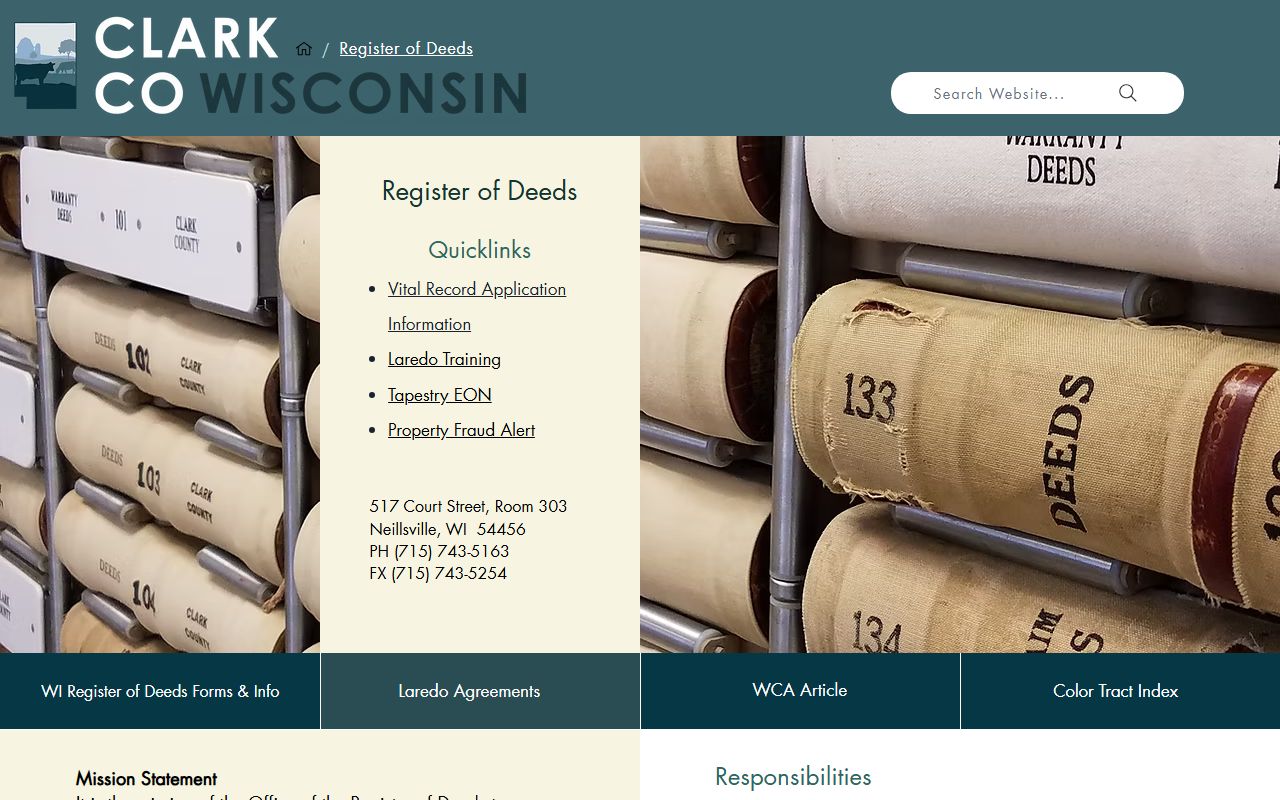
That office page is the most direct path to a local Clark County Death Index request.
The Clark County government website gives a second local check for service details and county contacts.
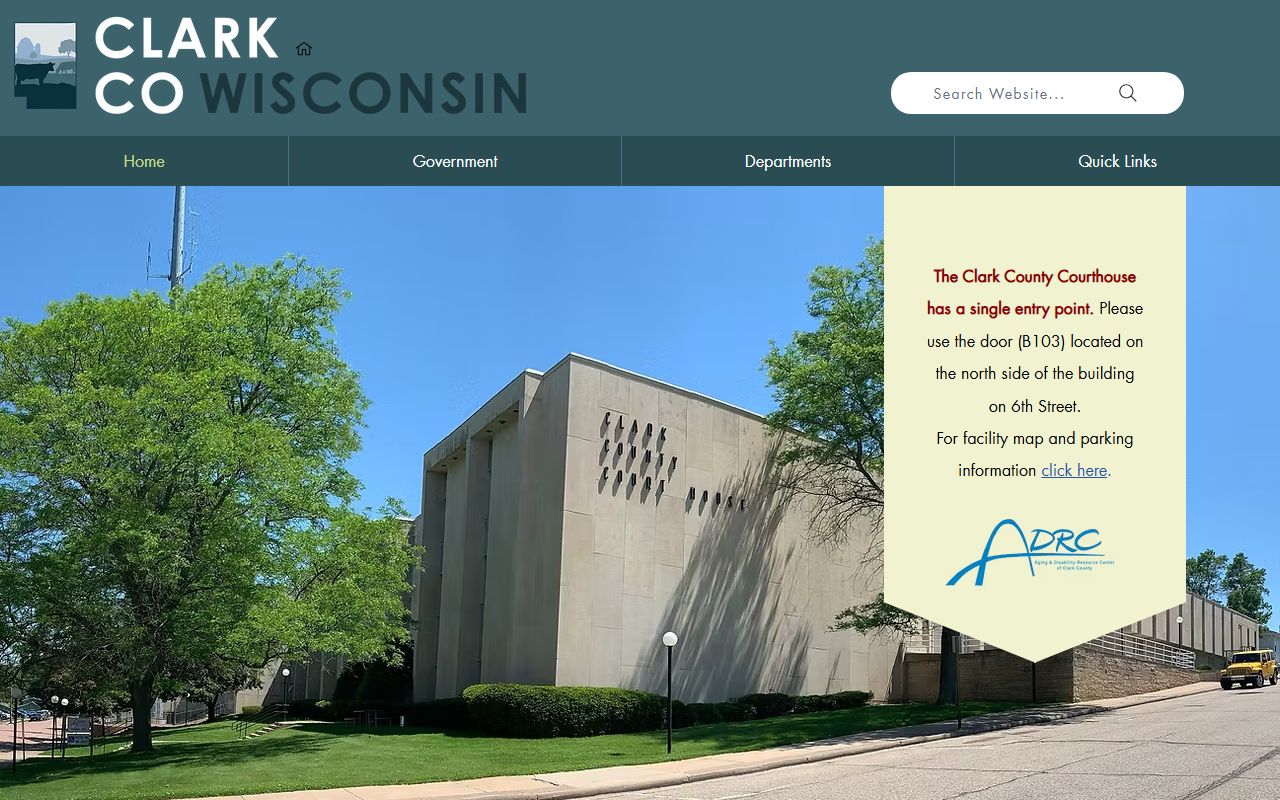
Use that page when you want a general county starting point before you send a request to the register office.
Clark County Death Index Search Tips
The best Clark County Death Index search starts with a name, a year, and one more clue. A short county death run means there may be fewer local entries, so the extra detail matters. Try a maiden name, a middle initial, a burial clue, or a town name if you have it. If the death happened away from home, the county file may still point you to the right time frame even when the family story is not fully clear yet.
Use this quick checklist before you search:
- Full name of the person
- Estimated death year or date range
- Alternate spelling, nickname, or maiden name
- Town, cemetery, or nearby place linked to the family
If the county office and the historical society page do not settle the question, compare the FamilySearch Clark County guide with the Wisconsin Historical Society pre-1907 index. FamilySearch is useful for county notes, related family records, and microfilm leads, while the historical society index is the better way to test whether the death appears in the older county run. The two sources can show you the same person with different spellings or with a different middle name attached.
That comparison is especially helpful in Clark County because the record trail starts in 1877. A record that looks missing may simply be indexed under a different form of the same name.
Wisconsin Death Index Rules
Wisconsin shifted death record filing from the county level to the state on October 1, 1907. That is the key split for a Clark County Death Index search. Deaths before that date belong to the county register. Later deaths are handled by the Wisconsin DHS Vital Records Office, which manages filing, preservation, and certified copies. The Library of Congress Wisconsin guide gives the same county-to-state rule and is a quick reference when you need to decide where to search first.
If you need in-person genealogy research, the DHS genealogy page explains the appointment process. Research visits run Monday through Friday from 2:00 p.m. to 4:00 p.m., and each searcher must register, show identification, and complete an application. Staff can answer questions, but they do not search for you. That setup matters when you are planning a later death request or comparing a county index entry with the state record set.
The legal rules live in Wis. Stat. Chapter 69, with the sections on death records, disclosure, and certified copies shaping who can ask for a record and what kind of copy can be issued. For later death certificates, the requester usually needs a direct and tangible interest, which includes close family members, authorized representatives, lawyers, and some agencies. The DHS certified copy page gives the current request guidance, fee details, and identification rules, including the standard $20 first-copy fee and $3 for each additional copy ordered at the same time. If you prefer not to mail a request, DHS also accepts online and phone orders through VitalChek. The Wisconsin State Law Library vital records page is a practical legal reference, and the Wisconsin Register of Deeds Association is a practical directory if you need help finding the right county office.
Clark County Death Index History
Clark County was established in 1853, and that history helps frame the local Death Index. Even with an early county date, the death record run starts in 1877, so the county register is the main local source for the older death period. If you are looking for a nineteenth-century family, that 1877 start date tells you exactly where the record trail begins and where it ends before state filing takes over.
The shorter county death span also changes the search strategy. You may need to move from a local request to the Wisconsin Historical Society index more quickly than you would in some other counties. That is not a problem. It just means the Clark County Death Index is best used as a step-by-step guide, with the register, the historical society, and the state rules all working together.
Clark County's government portal helps keep the local office context clear, and the county register page confirms the request path in Neillsville. With those two local sources and the historical index in hand, a Clark County Death Index search stays focused on the correct time period and the right office.
That measured approach matters because a shorter county death run leaves less room for broad guessing. In Clark County, a missing result often means the date is off, the spelling changed, or the search belongs in the state era instead of the county books. Using the county office, the historical index, and the 1907 cutoff together is the best way to keep the record search grounded in the real Clark County timeline.