
Search Florence County Death Index
The Florence County Death Index is anchored in a very early local record set because county vital records begin in 1882, the same year Florence County was established. That makes the county one of Wisconsin's younger counties, but it also means the local trail starts cleanly and is easy to place against the pre-1907 state split. If you are looking for a death date, a certificate copy, or a place to start a family-history search, the Florence County Register of Deeds and the Wisconsin Historical Society both matter. This page brings those paths together so you can go from an index clue to the right office without guessing.
Florence County Death Index Overview
Florence County Death Index Offices
The Florence County Register of Deeds is the main local office for death records, and the county says those records, along with marriages and births, all date back to 1882. The office is at the Florence County Courthouse in Florence, and requests can be made in person or by mail. That matters because Florence County does not have a broad paper trail compared with older counties, so the local office is the most direct route for an early record or a certified copy request.
The Florence County government site at florencecountywi.com shows the county services page that leads back to vital records and related public information.

That county-level entry point is useful when you need a quick contact path before you decide whether a county file or a state certificate is the better fit.
The Register of Deeds page at florencecountywi.com/departments/register-of-deeds shows the office that handles those local copies.
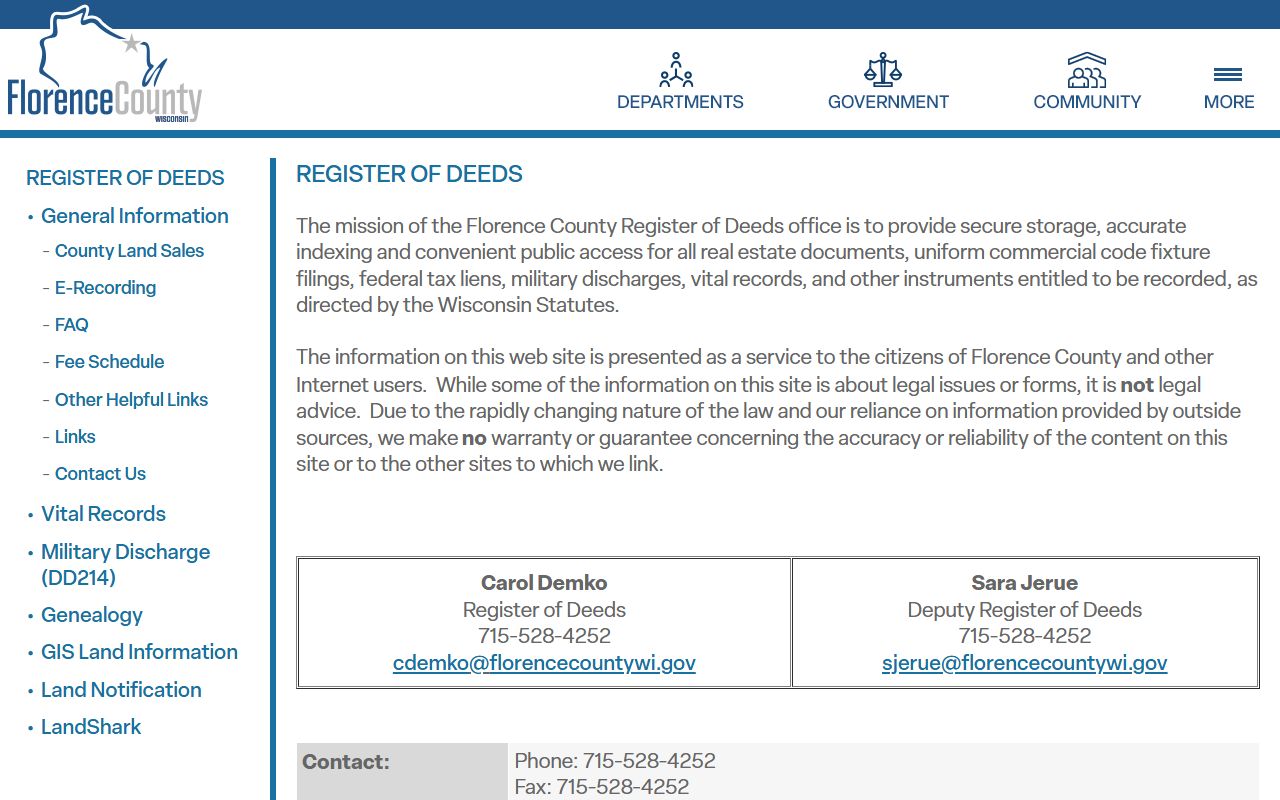
Because Florence County death records begin in 1882, that office is the best starting point for early county entries and for requests tied to the courthouse file.
Florence County Death Index Before 1907
The Wisconsin Historical Society article for Florence County at CS2606 confirms the same early starting point and places the county's pre-1907 vital records at 1882. That is a useful match because it shows the historical index and the county office agreeing on the same opening date. When a death falls before the statewide registration cutoff, the historical society index can be the fastest way to test a surname, a date, or a local place name before you order a copy.
The Society's article at wisconsinhistory.org/Records/Article/CS2606 includes the Florence County death-record image below and ties the county to its pre-1907 record run.

That historical image is important because it points to the county's earliest death-record era and helps you see why Florence County belongs in the pre-1907 research path.
If you are working with a family story, a cemetery clue, or a newspaper notice, the Florence County Death Index is still the best local frame of reference. The county began in 1882, so the first run of records was created in a more compact era than you see in many Wisconsin counties. That can make the early index easier to read once you know whether you are looking at an original county entry or a later state certificate.
Wisconsin Death Index Rules for Florence County
For deaths on or after October 1, 1907, the Wisconsin Department of Health Services becomes the main state office for death records. The DHS Vital Records Office files, preserves, and issues certified copies, while the genealogy appointment page explains how in-person family-history research works. That state split matters in Florence County because a search that starts with the wrong date range can send you to the wrong office even when the name is correct.
Wisconsin's access rules live in Wis. Stat. Chapter 69. In practice, that means the county office may ask for identification or proof of relationship before it releases a certified copy, especially when the request involves a newer death record. The law library summary at the Wisconsin State Law Library and the Wisconsin Register of Deeds Association both help explain how county offices fit into the statewide vital-record system.
If you need a state copy, you can also use VitalChek Wisconsin for an online request path. The useful rule is simple: Florence County holds the older county records, while DHS handles the statewide certificates after the 1907 cutoff. Keeping that line clear saves time and helps you decide whether to search the county books, the historical society index, or the state office first.
Florence County Death Index History
Florence County's record history is different from a long-settled county because the county itself was established in 1882. That makes it one of Wisconsin's younger counties, and it explains why the death record run is short, clean, and tied tightly to the county's own creation date. For a Death Index search, that history is useful because you do not have to wonder whether the local record set should begin in the territorial era. It begins with the county.
The Florence County government image at florencecountywi.com shows the county's public service presence and the same local framework that supports vital-record requests.
That county-government context matters when you are comparing a family account with the official record trail. Florence County did not grow into a large, layered archive before state registration, so the local death record and the historical index often stay close together. That makes the Florence County Death Index especially practical for early twentieth-century and late nineteenth-century research, because the county and historical society sources point to the same starting point.
The practical result is that a search for an 1882 through 1907 death in Florence County usually begins with a smaller and more readable record set. Once you know that the county started in 1882 and that the records begin there too, you can focus on the right year span instead of searching across decades that do not exist in the local file. That is a major time saver when you are trying to confirm a death for genealogy, probate, or a family archive.
The county government page is the best reminder that Florence County vital records are managed locally first, then carried into the state system later.
Florence County Death Index Search Tips
Start with the exact name, an approximate year, and whether the death happened before or after the 1907 state cutoff. That single date decision tells you if the Florence County Death Index, the Wisconsin Historical Society, or the Wisconsin DHS office should be your first stop. If the family moved along a county line or used a different spelling in different records, try those variants too. A surname that changes by one letter can be enough to hide an otherwise obvious entry.
The county's request path is straightforward, but a careful request still helps. When you contact the Register of Deeds, include the decedent's full name, the date or date range you can support, and the contact information needed for a mail request. If you are asking for a certified copy, the office may need to know your relationship to the person named in the record. That is normal under Wisconsin's vital-record rules and is one reason the county office wants a complete request instead of a short note.
For Florence County, the best research habit is to compare the county office, the historical society article, and the state rules together. The county tells you where the local file lives, the historical society shows the pre-1907 start, and Chapter 69 explains why certified copies are not always open to everyone. Those pieces fit together cleanly here because the county record run is so clearly tied to 1882.
Florence County Death Index Local Aids
The Library of Congress Wisconsin vital records guide is useful when you want a quick map of county and state record responsibilities. It gives context for why the Florence County Death Index begins at the county level and then shifts to DHS for later deaths. That same county-to-state timeline is echoed by the Wisconsin Historical Society Records index, which is why Florence County research is usually most efficient when you start by date rather than by office name.
The county page, the historical society article, and the state law resources are enough for most searches, but the bigger point is how they fit together. Florence County death records are not buried in a maze of overlapping dates. They begin in 1882, and that fact makes the early Death Index easier to search than in counties with older territorial files. If you know the family was in Florence County in the 1880s or 1890s, you already have a strong starting line.
When a search stalls, return to the county office first. The Register of Deeds is the local source for older records, the historical society can confirm whether the name appears in the pre-1907 index, and DHS becomes the right office only when the date crosses the state line. That order keeps the Florence County Death Index search practical and keeps the request focused on the record that is most likely to exist.