
Search Grant County Death Index Records
Grant County Death Index searches begin with the Register of Deeds in Lancaster, because that office handles the county's older death records and can point you to the right copy path for later ones. Grant County death records date back to 1876, the county was established in 1836, and the county was named after Ulysses S. Grant, so the record trail has both a long local history and a clear office path. You can request records in person, by mail, or online, which makes Grant County a particularly flexible place to start when you already know the approximate year.
Grant County Death Index Sources
The Grant County Register of Deeds is the main local office for death records. The office is at the Grant County Courthouse in Lancaster, and the county says death records date back to 1876. Because requests can be made in person, by mail, or online, the Grant County Death Index is easier to use than some county record systems when you are working from a distance or trying to move quickly from a name to a certified copy. The county government site is the other useful starting point if you need general public-service contact information.
The first local image on this page comes from the Wisconsin Historical Society's Grant County death-record article at its source page.
That image matches the county's early death-record run and gives a visual anchor for the pre-1907 Grant County Death Index period.
The second local image comes from the Grant County government site at Grant County government.
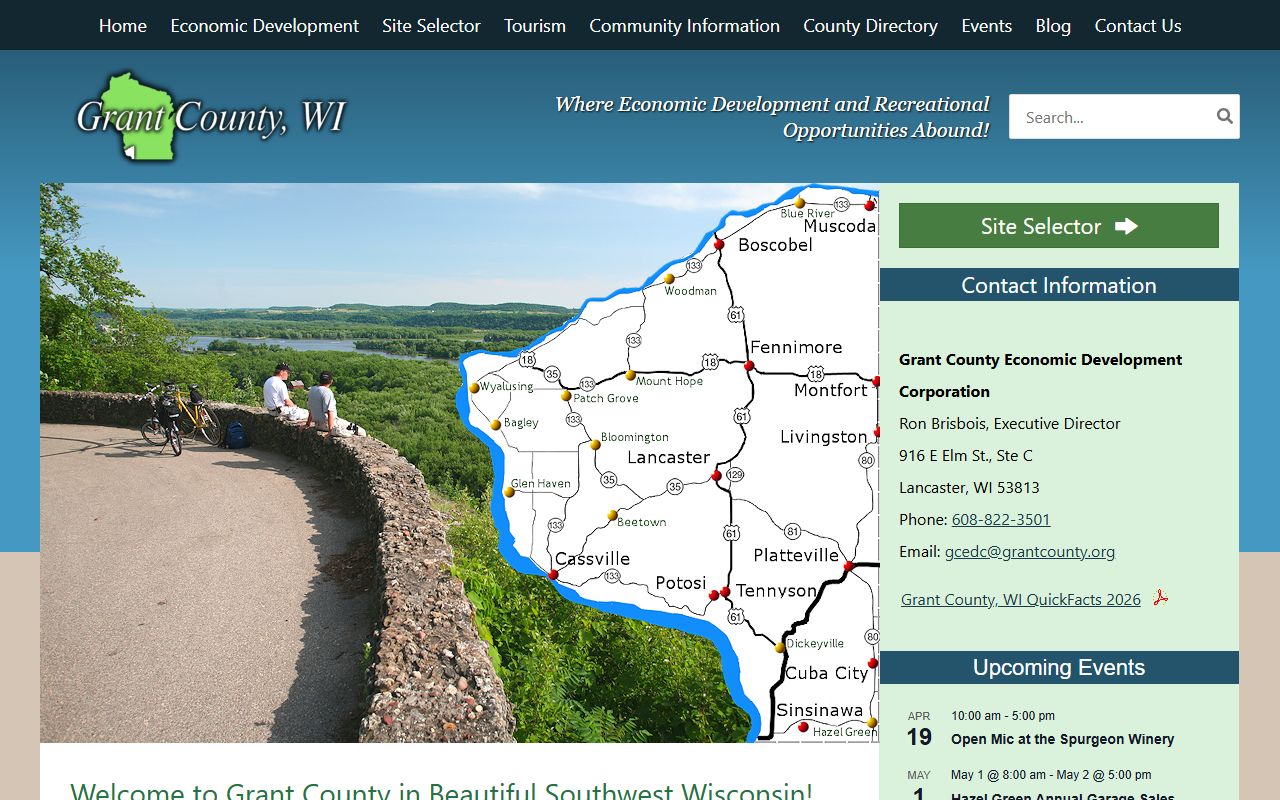
It reinforces the county's active office path and makes the county government side of the record search easier to connect with the historical index side.
Grant County Death Index Before 1907
The Wisconsin Historical Society says Grant County deaths before 1907 begin in 1876. That means a Grant County Death Index search can reach back to the mid-1870s, well before the state took over death record filing in 1907. The date split matters because it tells you whether the record should still be in the county file or whether you should shift to the state system for a later certificate. When you are tracing a nineteenth-century family line, that one date often decides the whole search path.
Grant County's early start makes the county office more than a simple copy desk. It is part of a longer record history that stretches across the county's growth from an 1836 county formation to the present-day courthouse in Lancaster. For pre-1907 research, the county register and the historical society work together in a useful way: the county office handles the record path, while the historical society helps confirm the date and the name before you request a copy. That is the cleanest way to use the Grant County Death Index without losing time in the wrong decade.
Grant County Death Index and State Rules
After October 1, 1907, Wisconsin's Department of Health Services becomes the main office for death certificates. Its Vital Records page explains the state system, and the change matters for Grant County Death Index searches because later records no longer sit primarily with the county register. The state office is the right place for copies once the record falls beyond the county-era cutoff, so the year on the death record is the first thing to check before you decide where to ask.
Wisconsin's Chapter 69 statutes provide the legal structure for vital records, while the DHS certified copy page explains how copies are issued and what the current fee structure is. If you want an online route for a later record, VitalChek Wisconsin is one of the state-listed options. The practical lesson is simple: older Grant County Death Index entries stay with the county, but later requests follow state rules and state request methods.
Grant County History
Grant County was established in 1836 and named after Ulysses S. Grant, which gives the county a strong historical identity long before the modern vital-record system began. That history helps explain why the county's death records start in 1876. The county existed for decades before the death-record trail begins, so a nineteenth-century search here is really a search through a mature local government record set rather than through a short or incomplete file. For Grant County Death Index work, the age of the county is part of the context, not just a fact to note.
The county government page keeps that context practical. It is the public landing page for county services, and it is where the register of deeds fits into the larger county system. When you are searching by family name, burial place, or approximate year, that county structure matters because it tells you which office still holds the older record and which office takes over later. In Grant County, the Death Index is not just a historical label. It is a working guide to a long-running county record system centered in Lancaster.
Grant County Death Index Search Tips
Start with the strongest clue you have and keep the date range tight. A full name, an approximate year, and a decision about whether the death is before or after 1907 are usually enough to get a Grant County Death Index search moving in the right direction. If you have a cemetery reference, obituary line, or family story, use it to confirm the place before you request a copy. The search gets easier when the county, the year, and the likely spelling line up.
The Grant County FamilySearch guide can help you think through alternate spellings and record clues, but the county register and the state office remain the actual record sources. If the record is old, the county office is the best starting point. If it is later, Wisconsin DHS is the better place to ask first. That distinction is the fastest way to keep a Grant County Death Index request accurate and avoid duplicate work.
Grant County Record Follow-Up
If the first search does not find the record, widen the request one step at a time. Check the Wisconsin Historical Society's pre-1907 index, review the county government page for office contact details, and use DHS for post-1907 certificates. That sequence follows the actual record system and keeps the Grant County Death Index search grounded in the right office. It is usually faster than guessing at random county or state sources, especially when you already know the person died in Grant County but not the exact year.
For certified copies, match the office to the date. The county register handles the older local file, while the state office handles the later record set. That simple rule is what makes the Grant County Death Index practical for both family history and document requests. Because the county accepts requests in person, by mail, and online, it also gives you more than one way to complete the search once you have the right year and the right name.
The Library of Congress Wisconsin vital records guide and the DHS genealogy page are useful final checks when you want to confirm the record path before you order. They echo the same county and state split that Grant County uses, which makes them good reference points when a request needs one more round of verification. That can be especially helpful when a death is close to the 1907 cutoff and you want to avoid sending a copy request to the wrong office.