
Search Oconto County Death Index
Oconto County Death Index searches work best when you start with the county file and the year. Oconto County death records begin in 1872, the county was established in 1851, and the county seat is Oconto, so the local trail is clear once you know the name and rough date. That makes the register of deeds the first stop for older records and a practical place to sort out whether a death belongs in the county book or the later state system. If you only have a family clue, the index can still point you in the right direction.
Oconto County Death Index Overview
Oconto County Death Index Office
The Oconto County Register of Deeds keeps the county death record trail and says death records date back to 1872. The office is at the Oconto County Courthouse in Oconto, Wisconsin, which makes it the first place to check when you need a county death record or a certified copy. The office also issues copies to eligible requesters, so a well-formed request can move a search from a name on paper to the record itself.
The Oconto County government site is the wider public entry point for the same work. It helps when you need office context, a second local contact, or a better sense of how the register of deeds fits inside county services. That matters because the county seat, courthouse, and records office all sit in the same local frame. If the death happened in Oconto County, the county side is the cleanest place to start.
The county government page at co.oconto.wi.us shows the local setting behind the image below.

That view matches the courthouse path and makes the county-level record trail easier to picture before you send a request.
Oconto County Death Index Before 1907
For Oconto County, records before October 1, 1907 stay on the county level first. That rule matters because the county death run begins in 1872, which means the oldest local entries were created before the statewide system took over. The Wisconsin Historical Society's Oconto County article is the best historical checkpoint for that early span. It confirms the county's place in the pre-1907 record line and gives you a second source to compare with the courthouse file.
The historical society page at wisconsinhistory.org/Records/Article/CS2630 points to the older county record run behind the image below.
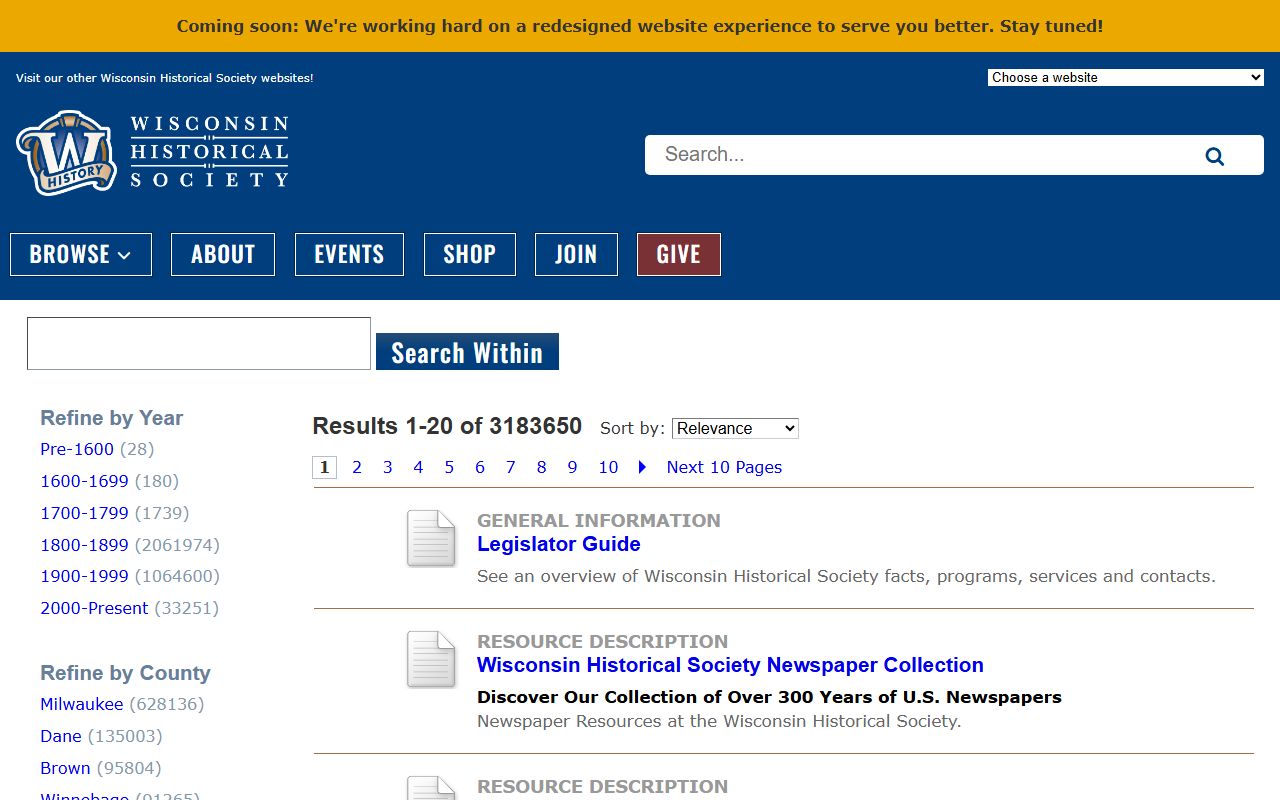
That image is a good reminder that Oconto County Death Index work for older deaths starts with the county-era books, not the state certificate system.
FamilySearch adds a useful layer for this county. The Oconto County guide can help with township names, cemetery clues, and family spellings that do not always match the county index line. If a surname looks close but not exact, the guide can show why. A small place clue can matter just as much as the year when you are dealing with a nineteenth-century death.
Wisconsin Vital Records Rules
After October 1, 1907, Wisconsin DHS becomes the main state office for later death records. The Wisconsin DHS Vital Records page explains the current request path, and the genealogy page explains how in-person search appointments work. That is the right turn when the Oconto County Death Index points to a later certificate instead of a county book entry.
The DHS page at dhs.wisconsin.gov/vitalrecords/index.htm shows the state office route behind the image below.
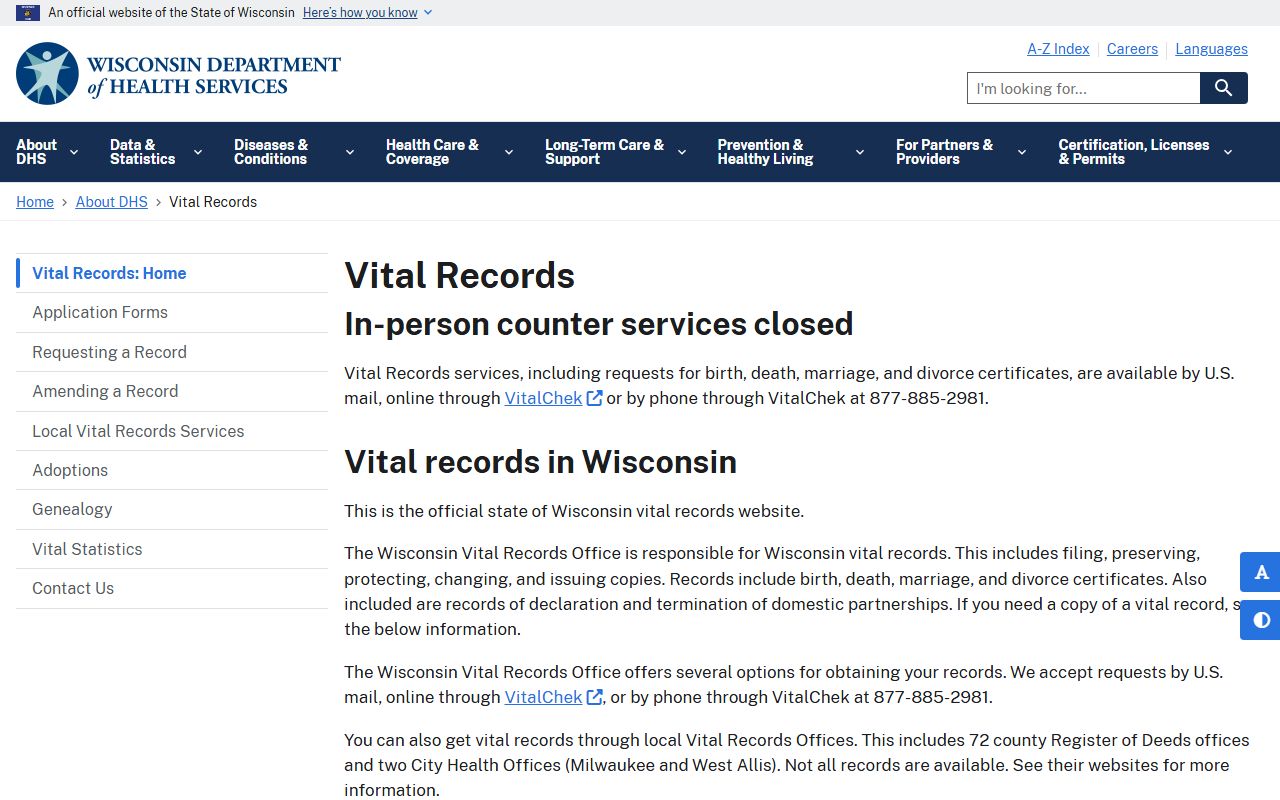
That image fits the post-1907 side of the search and gives you a clear handoff point when the county record run ends.
When you need to understand access, the state rules help too. Wisconsin Statutes Chapter 69 sets the framework for vital records, while the DHS certified copy page explains the practical request path. If you prefer an online route, VitalChek Wisconsin is the approved channel many people use for later copies. The Library of Congress guide is also a good plain-language map of the county and state split.
Oconto County Death Index Research Help
The FamilySearch Oconto County guide is useful when a death date is close but not exact. It can help you compare family groups, local place names, and record hints before you contact the office. That matters in Oconto County because a search often hinges on one small clue. A township, a burial site, or a second spelling can shift the result from uncertain to usable.
The Wisconsin Register of Deeds Association and the Wisconsin State Law Library vital records page help explain the county and state structure around death records. They do not replace the register of deeds, but they make the request path easier to follow when you are trying to tell a county copy from a state copy. That is helpful for Oconto County because the county-level trail is still the right starting point for older deaths, while later ones belong with DHS.
The Wisconsin Historical Society records portal gives you another broad research lane. It is useful when you want to test a name against the pre-1907 index, compare an old spelling, or see whether a death note ties to a larger family story. For Oconto County Death Index work, that combination of county office, historical society, and FamilySearch usually solves the first round of questions without much waste.
When a request stalls, go back to the basics and tighten the facts. A full name, an age if you have it, and a likely township or burial place can do more than a vague year range. Oconto County records are old enough that one wrong letter can hide a match, but they are also clear enough that a careful second pass often finds the record fast. If the county office tells you the record is not in the early book, use the same clue set at DHS for the later date range.
Oconto County History
Oconto County was established in 1851, and the county seat is Oconto, so the courthouse and records office sit in the same local center. That helps when you are trying to keep a death search simple. The county record run begins in 1872, which means the local books start within a fairly tight window after county formation. You are not sorting through a long territorial gap here. You are checking a county that built its death trail in a clear, narrow span.
That is why Oconto County Death Index searches reward a date first approach. If you know the person died in the county, the year usually decides the next stop. Early deaths point to the register of deeds and the historical society. Later deaths point to DHS. Once you keep that split in mind, the search feels much less like guesswork and much more like a clean record path.
That local history also helps when a family line crosses the county border or uses older place names. A death note may mention a township, a church, or a burial place instead of the county seat, but the county office still ties those clues back to the same record system. When the date is close to the county start line, that local frame can be the detail that keeps the search from drifting into the wrong county.
Note: The 1872 start date and the October 1, 1907 cutoff are the two dates that keep an Oconto County death search on track.