
Oneida County Death Index
Oneida County Death Index searches are easiest when you start with the county year and the office in Rhinelander. Oneida County death records begin in 1888, the county was established in 1885, and the county seat is Rhinelander, so the record trail is short and direct. That helps when you only know a surname, a rough death year, or a burial clue. The county register of deeds, the Wisconsin Historical Society, and the later state system each play a different part, and the date usually tells you which one comes first.
Oneida County Death Index Overview
Oneida County Death Index Office
The Oneida County Register of Deeds is the county office that handles vital records and certified copies for eligible requesters. The office is at the Oneida County Courthouse in Rhinelander, which makes it the first local stop when you need a county death record or a clear answer about where an older entry belongs. Since the county's death records begin in 1888, the office is especially useful for late nineteenth century and early twentieth century searches.
The Oneida County government site gives the broader local service context. It helps when you need to confirm office direction, find a contact path, or see how the register of deeds fits with the rest of county government. That is useful in Oneida County because the county seat, courthouse, and public office structure all point back to Rhinelander. A search starts faster when the place and the office line up.
The county government page at co.oneida.wi.us shows the local setting behind the image below.
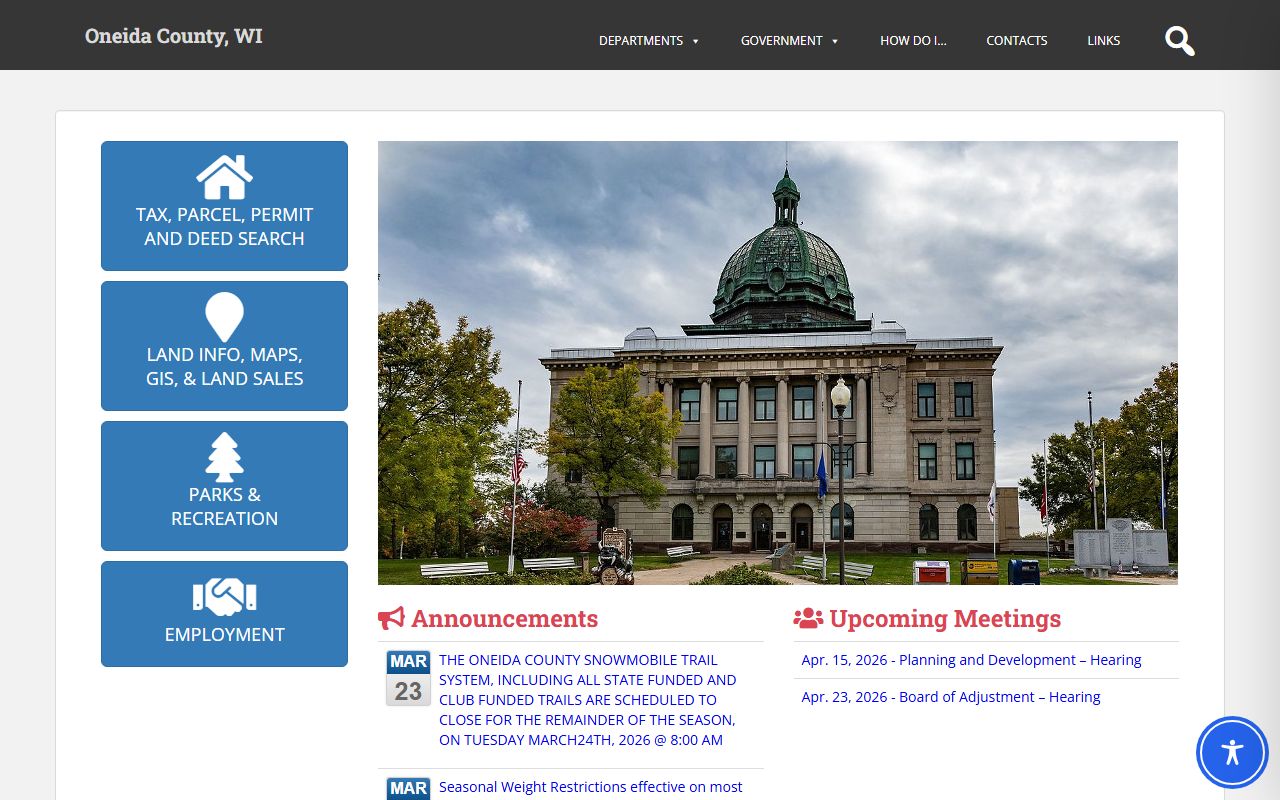
That image gives you the local office frame and helps keep the courthouse path in view before you request a copy.
Oneida County Before 1907
Records before October 1, 1907 stay at the county level first, and that rule fits Oneida County well because the local death run starts in 1888. The Wisconsin Historical Society's Oneida County article confirms that pre-1907 span and gives you a historical checkpoint for older deaths. If you are working with a death in the 1890s, the county office and the historical society are the two places that matter most at the start.
The historical society page at wisconsinhistory.org/Records/Article/CS2631 matches the older county record line behind the image below.
That image is a good cue that Oneida County Death Index work for early deaths still begins with county-era records, not with later state certificates.
FamilySearch adds another useful layer. The Oneida County guide can help you sort family lines, town names, and surname changes that do not always show up the same way in the county index. If you have a name that feels close but not exact, the guide can help you decide whether you are missing a spelling, a place, or a different person with the same family name.
Wisconsin Vital Records Rules
After the 1907 cutoff, later death records move into the Wisconsin state system. The Wisconsin DHS Vital Records page explains the current request path, and the genealogy page explains how in-person research works by appointment. That makes DHS the right follow-up when a Oneida County Death Index search lands on a post-1907 death instead of a county book entry.
If you need to check copy rules, the state resources stay useful. Wisconsin Statutes Chapter 69 sets the legal frame, while the DHS certified copy page explains how requests move through the state office. Many researchers also use VitalChek Wisconsin for the online path and the Library of Congress guide for a plain map of the county and state split.
Oneida County's death record line is easy to place once you keep the date in front of you. If the death falls before October 1, 1907, stay with the county office and the historical society. If it falls later, move to DHS and treat the county page as a lead, not the final copy source. That simple split saves time and keeps the request on the right side of the date line.
The state route is also where restrictions become clearer. If you are requesting a later death certificate, the difference between a research lead and an official copy matters, and the DHS pages explain that more cleanly than most county summaries. For Oneida County searches, keeping that county-to-state handoff in mind usually prevents a second round of requests.
Oneida County Death Index Research Help
The FamilySearch Oneida County guide is a good place to check before you order a copy. It can help with surname variants, burial clues, and related local records that point you back to the right person. That is useful in Oneida County because a small spelling shift or a town name can change the result more than you might expect.
The Wisconsin Register of Deeds Association and the Wisconsin State Law Library vital records page explain how county offices fit into the wider Wisconsin vital-record system. They are helpful when the question is not just where the record is, but which office should answer first. For Oneida County Death Index work, that helps keep the request clean when you are sorting a county copy from a state copy.
The Wisconsin Historical Society records portal is another practical backup. It lets you compare a county clue with the pre-1907 line and gives you a broader view when the family story is thin. In a county with a late start date and a clear courthouse seat, that extra check is often enough to turn a rough search into a real lead.
If you are writing to the office, include the full name, the best year you have, and any local clue that narrows the search. A death in Oneida County can be easy to miss if the spelling is off by one letter or if the family used a town name instead of the courthouse city. Clear details save time for the office staff and make it much more likely that the first response will point you to the right book, copy, or state follow-up.
Oneida County History
Oneida County was established in 1885, and the county seat is Rhinelander, so the courthouse and the records office are tied to the same place. That matters because the county's death record run begins in 1888, just a few years after formation. You do not need to chase a deep territorial record trail here. You need a clean year, a name that makes sense, and the right office for the date.
That is what makes Oneida County Death Index searches fairly direct. The county office handles the early local file, the Wisconsin Historical Society confirms the pre-1907 span, and DHS takes over once the date crosses the state line. If you keep that structure in mind, the search stays simple and the chances of a wrong-office request go down fast.
The county seat detail also helps when you are sorting out where to send a request. Rhinelander is the local hub, so the courthouse location and the register of deeds page work together as the practical address line for the county file. That is a small point, but it saves time when a search starts from a note, a family memory, or a copied index line that does not say much more than the surname and year.
Note: The 1888 start date and the October 1, 1907 cutoff are the two dates that matter most in Oneida County.