
Search Outagamie County Death Index
The Outagamie County Death Index starts in 1869, so it gives you a real county-level trail for older family deaths, burial clues, and certified copy requests. The county government center is in Appleton, which keeps the main record offices close together and makes it easier to move from one contact to the next. If you know the name and a rough year, you can usually tell right away whether the record should still sit with the county or whether you need to move toward the state system. That simple date check saves time and keeps the search on the right track.
Outagamie County Death Index Overview
Outagamie County Death Index Sources
The Outagamie County Register of Deeds is the main local office for county death records, and the Outagamie County Clerk is the other county contact worth keeping close when you need help sorting a request. Outagamie County death records begin in 1869, which gives the register a long local run and makes it the first stop for older deaths tied to Appleton or another county community.
Because the county government center is in Appleton, the local record path stays tight. That matters when you are trying to separate a county-held death from a later state certificate or when you want to check whether a family line belongs in a pre-1907 record set. The county office and the clerk page work well together when you need a quick lead before you place a formal request.
The Wisconsin Historical Society's Outagamie County article gives the best quick view of the county's death-record history.
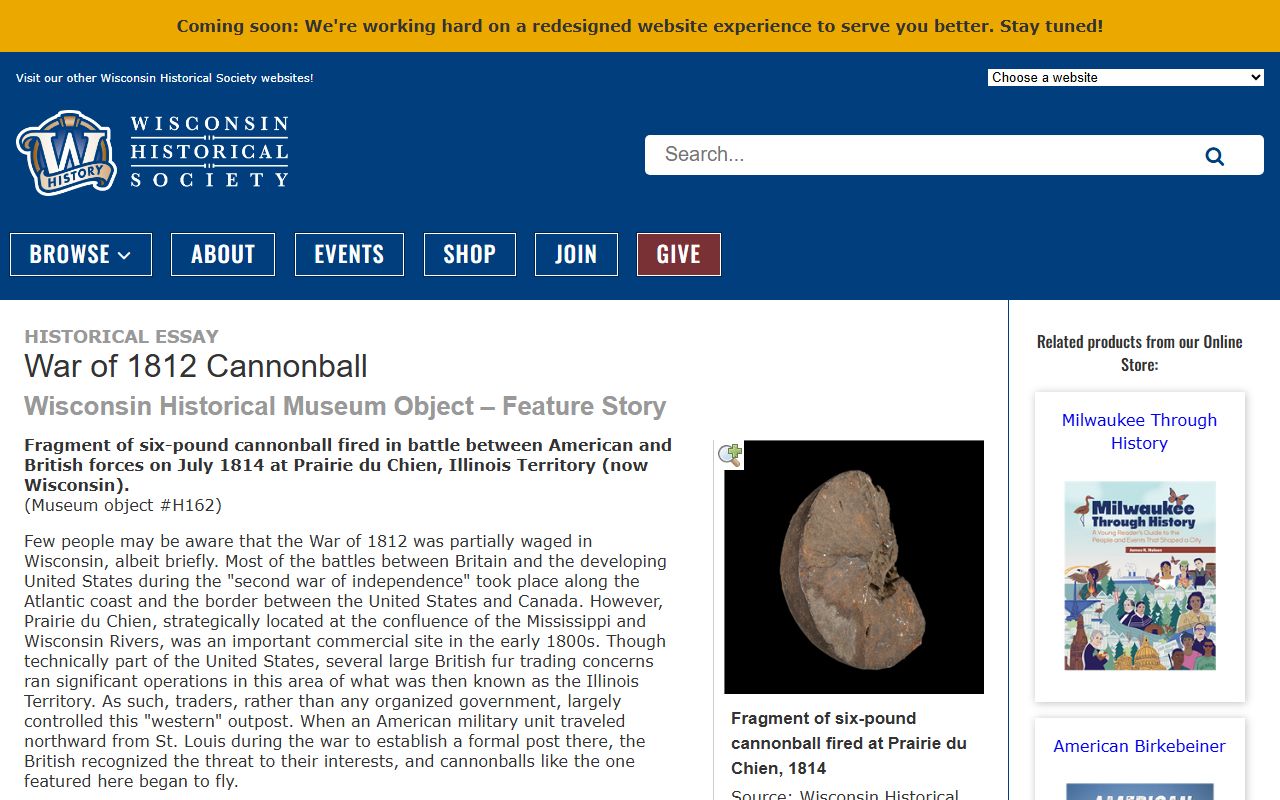
That image is a clean reminder that Outagamie County death research begins with a county record trail, not with a guess.
Outagamie County Death Index Before 1907
For deaths before October 1, 1907, the county file is still the main local source. Outagamie County's death records start in 1869, so the county level record trail covers the full late nineteenth century and the first years of the twentieth century. If the date is close but not exact, the historical society index can help you decide whether the name belongs in the county run or needs a wider search.
The Wisconsin Historical Society records portal is useful when a family story points to an older death but the spelling or year is fuzzy. Pre-1907 county records are often strongest when you give them room to breathe, and the state index can help you widen the net without losing the county focus. That is especially useful when a surname shows up in more than one line or when the burial clue is stronger than the civil filing clue.
The Wisconsin Historical Society's pre-1907 index is the best state backup when you want to confirm an Outagamie County death before you ask the county office for a copy.
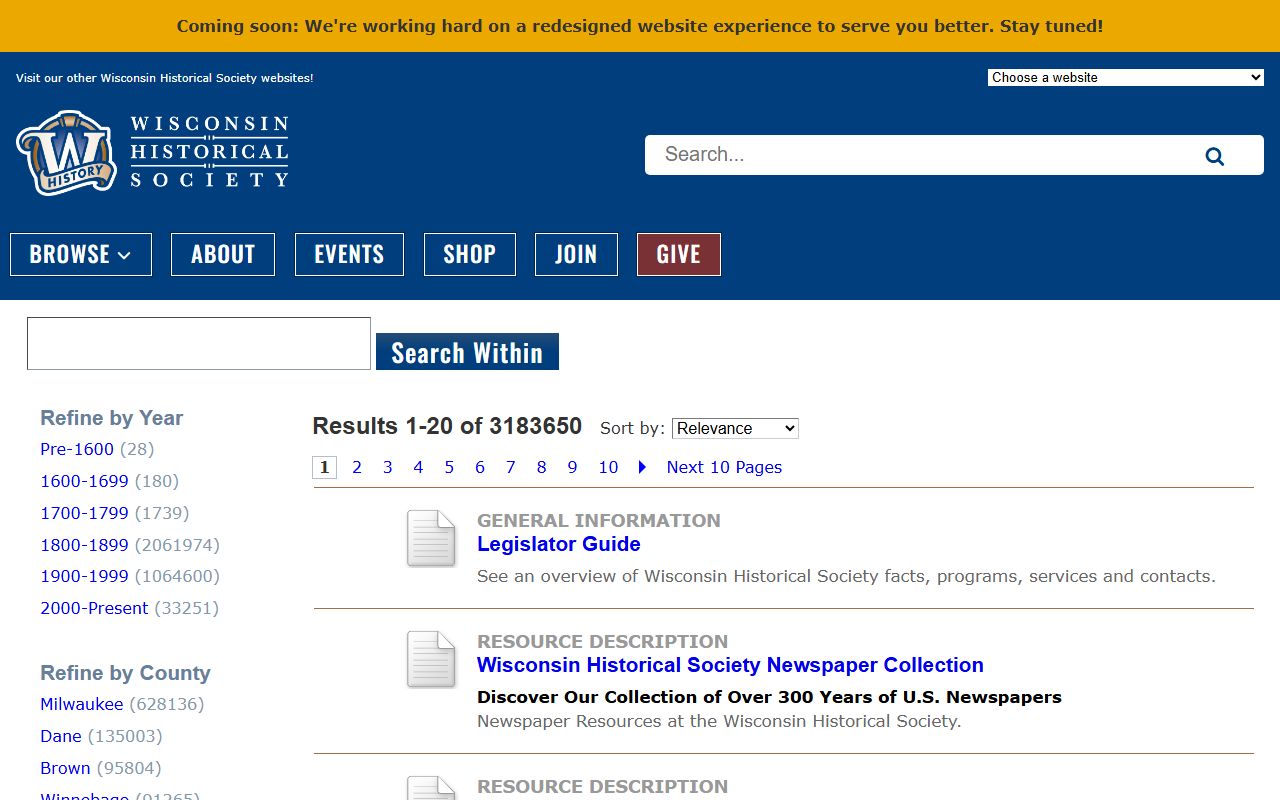
That statewide index helps you keep the search anchored to the right year before you make the request.
Outagamie County Death Index and State Records
Once a death falls after the 1907 cutoff, the Wisconsin DHS Vital Records page becomes the main state route. That is where you go when the county file has ended and you need a later certificate, a request method, or a clear next step for a record that is no longer held at the county level.
The state office also keeps a research path open for people who need to search before they order. The Wisconsin DHS genealogy page explains the on-site process and gives you a place to work through names, dates, and file history when the county trail is not enough on its own.
The Wisconsin DHS Vital Records page is the right match for a later Outagamie County Death Index request.
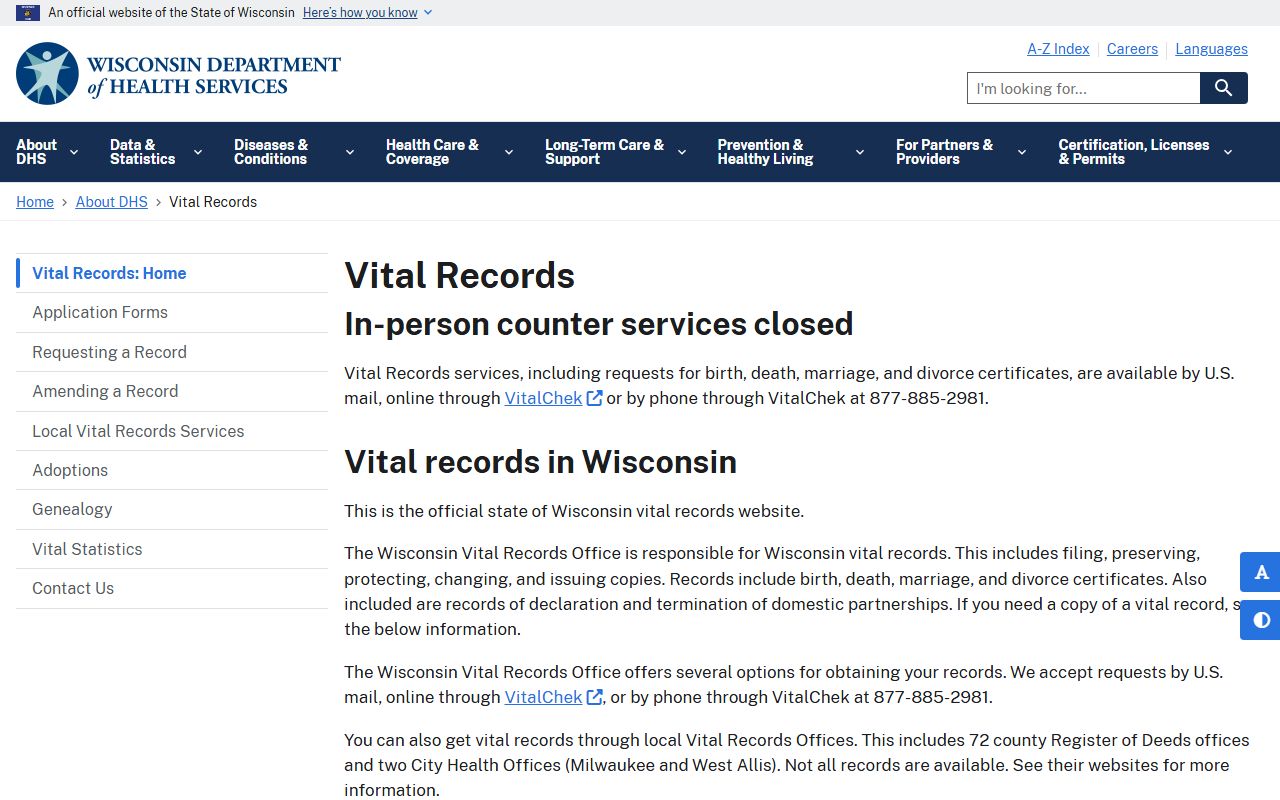
That image marks the point where the county search ends and the state certificate path begins.
The Wisconsin DHS genealogy page shows the research side of that same system.
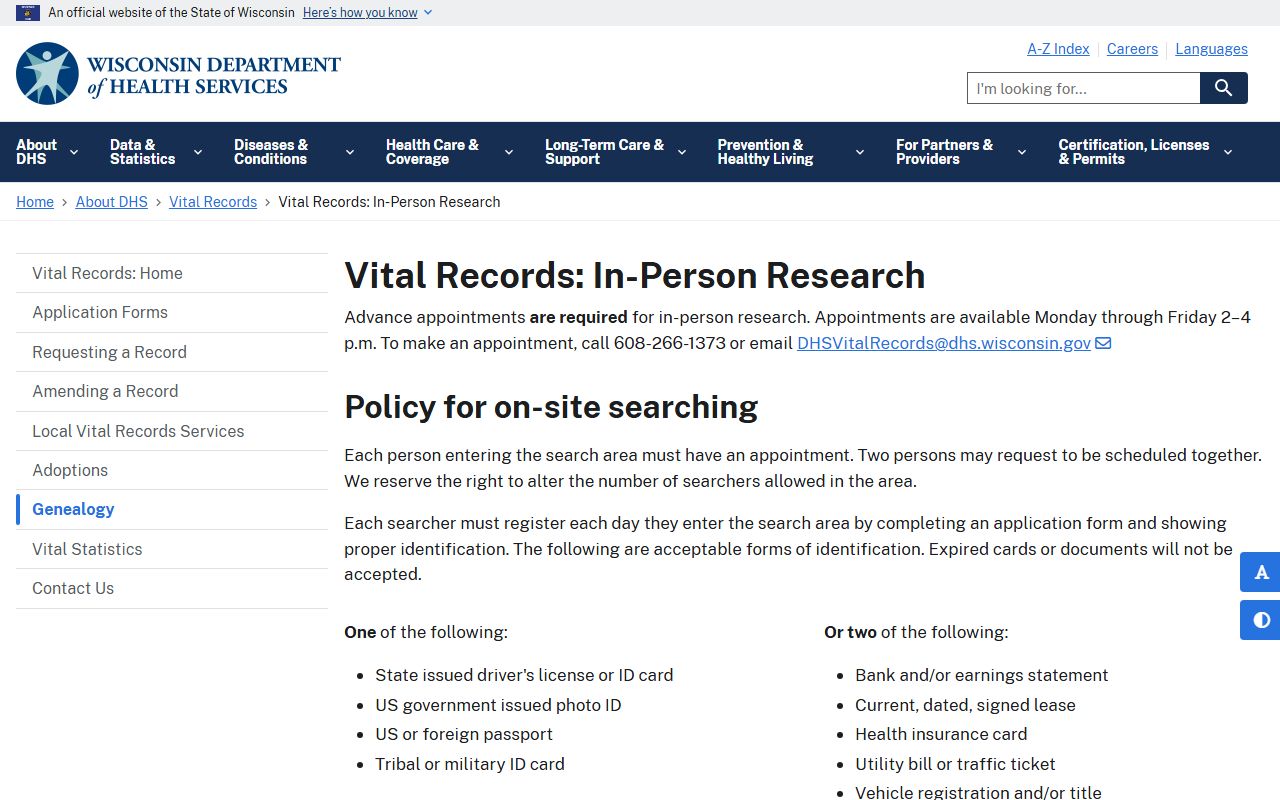
That view is useful when you still need to compare old names and file details before you place a formal request.
Wisconsin Statutes Chapter 69, at Wisconsin Statutes Chapter 69, explains the legal framework for vital records and certified copies. It helps show why some later requests need extra proof before the copy is released.
Appleton Research Resources
The Appleton Public Library can help when the county record alone does not close the gap. Local history tools, obituary work, and broad name checks are useful when you are trying to confirm the right person before you order a copy from the county or state.
That kind of local research is most helpful with common surnames. A library check can separate one Outagamie County death from another, or show that a family moved between Appleton, nearby towns, and other Wisconsin places before the death was filed.
The county clerk can also matter more than people expect. If a search turns from a plain Death Index question into a broader courthouse issue, the Outagamie County Clerk gives you another local contact path without forcing you to leave the county system too early. In a county centered on Appleton, that second office can save time when a family note points to a filing question instead of a clean certificate request.
Outagamie County Death Index History
Outagamie County was established in 1851, and its death records begin in 1869. Those two dates shape almost every search, because they tell you when the county was created and when the surviving county death trail begins. If the death you are chasing falls near that early window, the record may be in a paper book, a historical index, or both.
The county government center in Appleton matters too. It keeps the record offices in one place and gives the county a practical search pattern that works well for researchers. A Death Index page is not just a list of names here. It is part of the county's local record history, and that history still helps guide a modern search.
Outagamie County history also helps explain why county and city clues overlap so often. Appleton is the center most people know, but the county record trail reaches across villages, townships, and burial places that may not use the same wording a family remembers. When the search starts broad, the best move is to anchor the year first, then line up the place clue with the county office and the historical index.
Outagamie County Death Index Tips
The best search starts with a full name, a rough year, and a clear choice about whether the death belongs before or after October 1, 1907. If you have a town, spouse name, or burial clue, add it before you ask for a copy.
Before you contact the office, gather:
- Full legal name and any spelling variants
- Approximate date or year of death
- Whether the death was before or after October 1, 1907
- Appleton, a township, or another county clue
- Whether you need a research lead or a certified copy
If the death is before the state cutoff, start with the county register and the Wisconsin Historical Society. If it is later, use Wisconsin DHS and keep the county record as a lead rather than the final stop. That order keeps the Outagamie County Death Index search in the right lane from the start.
If the first search misses, do not widen everything at once. Check spelling variants, try the historical index, and then compare the county clue with Appleton-area library and courthouse sources. That step-by-step approach is more useful than a broad guess because Outagamie County has enough record depth that a small detail often changes the result.
Note: Outagamie County searches work best when you sort the year before you place the request.