
St. Croix County Death Index
St. Croix County Death Index searches start with the county date line. Death records begin in 1876, the county was established in 1840 as part of Wisconsin Territory, and Hudson is the county seat and government center. That makes the Register of Deeds the first stop for older deaths and certified copies, while the Wisconsin Historical Society and state vital-record tools help when the record falls into a later period or needs a broader search path. If you are working from a family story, a burial note, or a rough year, the county history gives you a clean way to narrow the search.
St. Croix County Death Index Overview
St. Croix County Death Index Offices
The St. Croix County Register of Deeds maintains county vital records and says death records date back to 1876. The office is located at the St. Croix County Government Center in Hudson, Wisconsin, so it is the most direct local stop for older county deaths and certified copies. Requests can be made in person, by mail, or online, which gives researchers a few practical ways to reach the right office without turning the search into guesswork.
The county government site at St. Croix County Government shows the wider public structure behind that records office and helps you see where the death index fits inside county services.
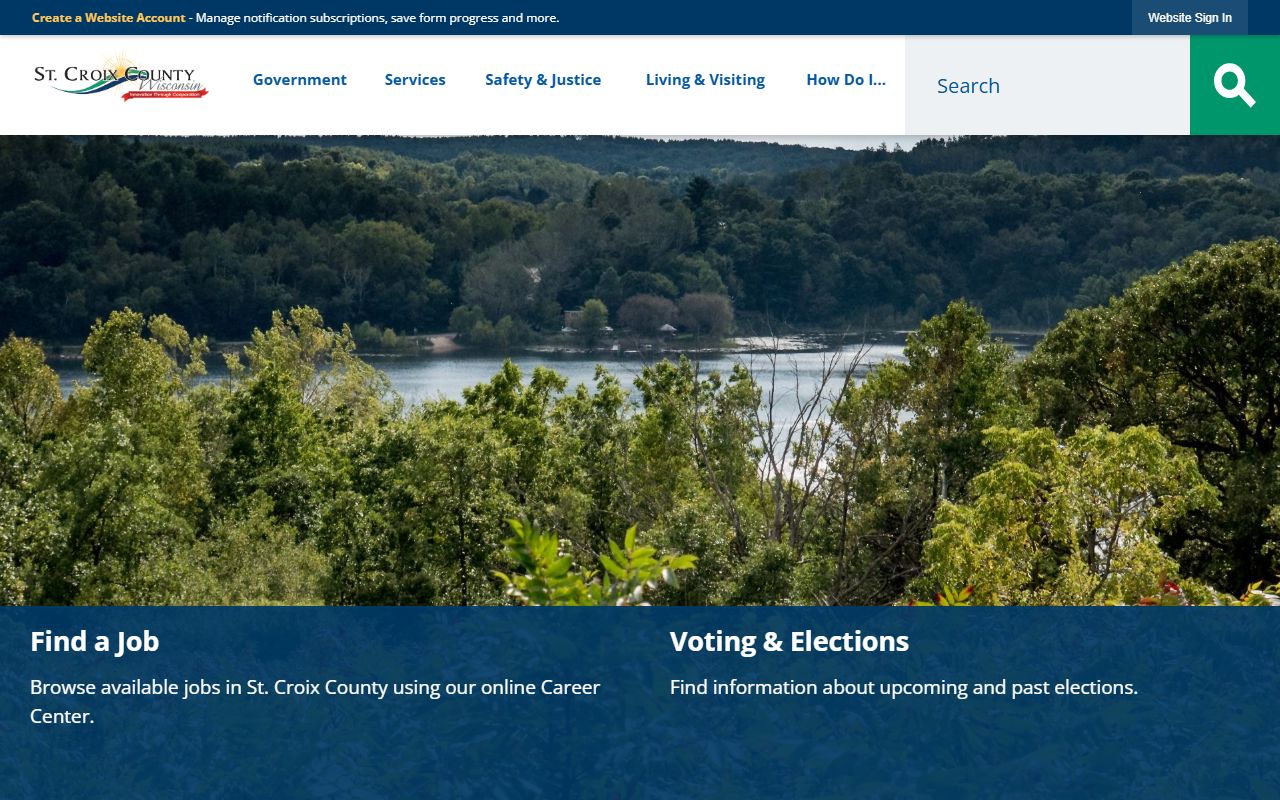
That image is a useful reminder that the county government center and the register of deeds work together for local record requests. It also fits the Hudson setting, which matters when you need one office that can answer a county-level question fast.
Records before October 1, 1907 stay at the county level first, so older St. Croix County deaths should begin with the county office and not the state system. That simple rule keeps a St. Croix County Death Index search tied to the courthouse file where the record was first kept.
The county site is also useful when a search needs more than a copy request. It can point you toward other public services, confirm the Hudson office location, and keep the record trail rooted in a real county contact instead of a broad statewide search. That kind of local framing saves time when you already know the death belongs to St. Croix County and just need the right desk to answer first.
St. Croix County Death Index Before 1907
The St. Croix County article at Wisconsin Historical Society confirms the county's pre-1907 vital records and gives the clearest historical checkpoint for older local deaths.

That image points to the historical society route for St. Croix County deaths that belong in the county-era record set. It is helpful when a death falls in the nineteenth century and you need a second source to compare with the courthouse file.
The FamilySearch St. Croix County guide is useful when the name, place, or year is not fully clear. It can help you compare family lines, town clues, and cemetery references before you decide whether the county record or the state record is the better fit.
St. Croix County was established in 1840 as part of Wisconsin Territory, so its early history reaches back well before statehood. That history matters because the 1876 death record start date sits inside a much older county story, and the Death Index works best when both dates stay in view.
St. Croix County Death Index and State Records
Once a death falls after October 1, 1907, the Wisconsin Department of Health Services becomes the main state office for a St. Croix County Death Index request. The Wisconsin DHS Vital Records page explains the modern request path and is the right handoff point when the county record trail ends.
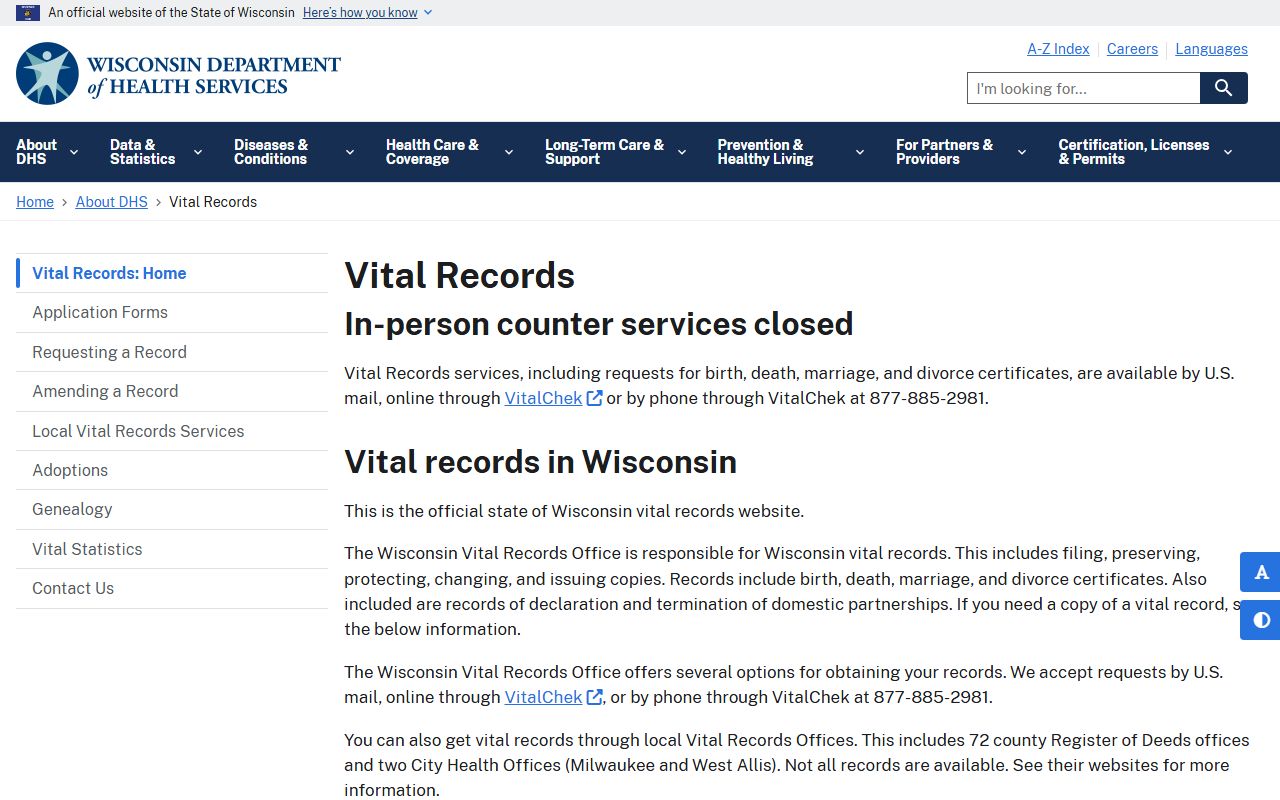
That image marks the state office that handles later death records and certified copies. It is the correct follow-up when a St. Croix County search moves beyond the county-era books.
The state process is easier to read when you keep the legal and research tools together. Wisconsin Statutes Chapter 69 governs the vital-record framework, the DHS genealogy page explains in-person research, and the Library of Congress Wisconsin guide gives a plain-language version of the county-versus-state split.
Note: For a St. Croix County Death Index search, keep 1876 and 1907 together so you know when to stay local and when to move to DHS.
St. Croix County Death Index Research Help
The St. Croix County Government site is useful when you need office context, while the FamilySearch St. Croix County guide can help you compare local clues with family history. Together they make the county office easier to use when a death record is close but not yet fully identified.
The county government center in Hudson matters because it keeps the records office tied to the broader county service structure. If the record question becomes procedural, the county site and the register of deeds page give you the local frame before you move to the state side of the search. That is especially helpful in a county where older records still belong to the county file first.
The statute page at Wisconsin Statutes Chapter 69 is another useful checkpoint when the request needs a legal explanation. The image below matches that state law context and helps show why the county-to-state split matters so much in Wisconsin death record work.
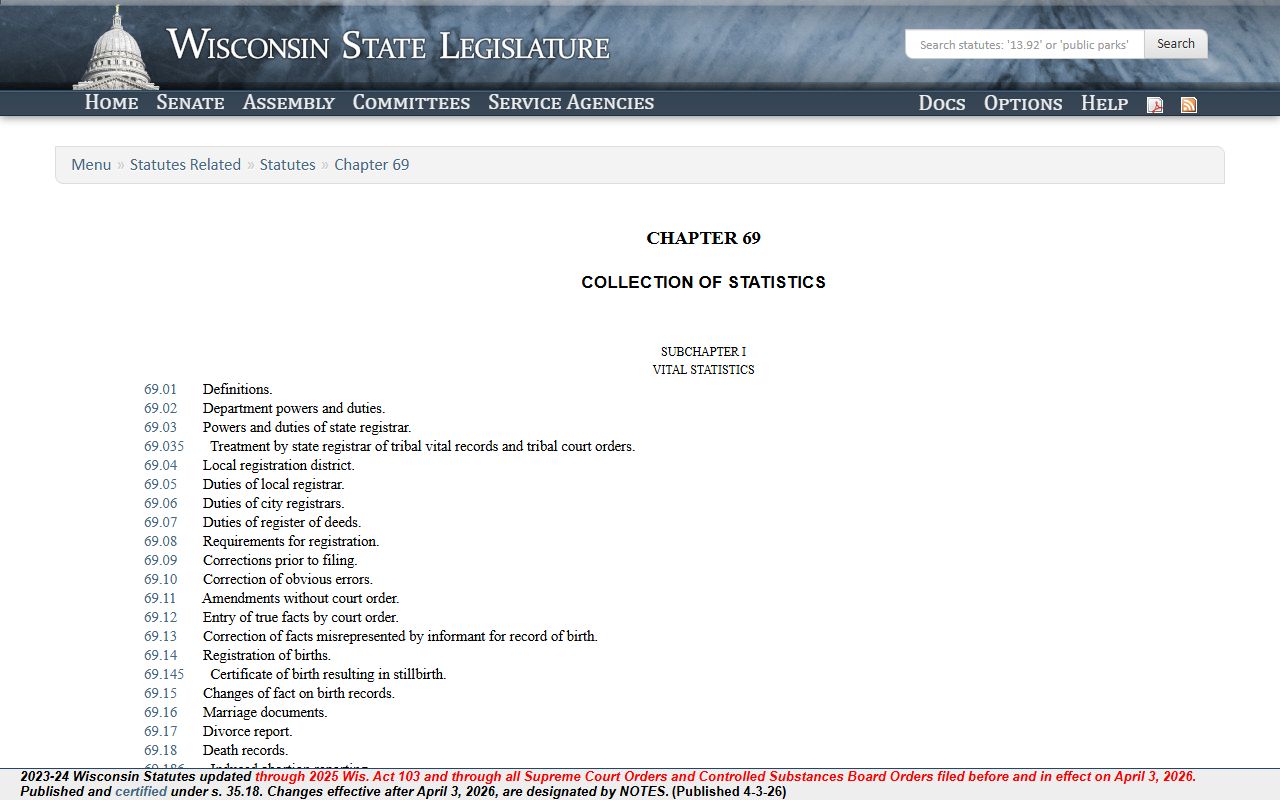
That image is a good reminder that the county office, the state law, and the record date all have to line up before a request makes sense.
St. Croix County Death Index History
St. Croix County's 1840 start as part of Wisconsin Territory gives the local record trail a longer civic history than the death records themselves. That matters because the county death index begins in 1876, which means the local books sit inside a county that was already established long before the first listed death. Hudson, as the county seat, gives the record trail a clear home base.
The Death Index works best here when the date is tight. If the death falls before October 1, 1907, the county office is the right first stop. If it falls later, DHS takes over. That simple split keeps a St. Croix County Death Index search from drifting into the wrong office and helps you decide whether you need a local copy, a historical lead, or a state certificate.
When the exact year is uncertain, go back to the family clue, the burial note, or the town name and work outward from there. St. Croix County's long borderland history means a person can show up in more than one nearby source, but the county record path is still the anchor that keeps the search grounded.
That county path matters even more when a surname crosses the river towns or appears in a neighboring county book. A careful St. Croix County Death Index search keeps the 1876 start date, the Hudson office, and the 1907 state split in the same frame so you do not chase the wrong office or the wrong era.
The Wisconsin Historical Society page and the county register of deeds page work best as a pair here. One confirms the older county record span, and the other gives the present local office for copies and questions. Keeping both open during a St. Croix County Death Index search usually saves time, especially when the first clue is only a border-town reference or a rough family date.