
Search Walworth County Death Index
Search Walworth County Death Index records when you need a county death copy, a family date check, or a place clue tied to Elkhorn. Walworth County was established in 1836 as part of Wisconsin Territory, and death records begin in 1872, so the county trail runs through a long local span before the state cutoff in 1907. That gives you a clear order. Start local, confirm the year, and then move to the state path only when the death falls outside the county books. A name, a town, and a rough year are often enough to begin.
Walworth County Death Index Overview
Walworth County Death Index Office
The Walworth County Register of Deeds is the county office to start with when you want a Walworth County Death Index record. The office handles vital records for the county and gives you the local path for a death copy, a year check, or a request for a certified record. Because the county seat is Elkhorn, the office search stays focused on one local center. That makes the request easier to place when you only know the surname and a likely year.
The Walworth County government home page gives the wider local frame for the same record path. It helps when you want to see how the register of deeds fits into the county service structure. That broader view matters because a death search is often more than a form. It can need a place clue, a local contact, and a quick way to tell whether the record belongs in the county file or in a later state source.
The county started in 1836, long before statehood. That early date matters. It means Walworth County death research sits inside a county system that has been active for a long time, and that system still holds the older local death files. If the family line has roots in Elkhorn or another county town, the office page is the cleanest first step.
The county government page below helps show the county seat setting in plain view.
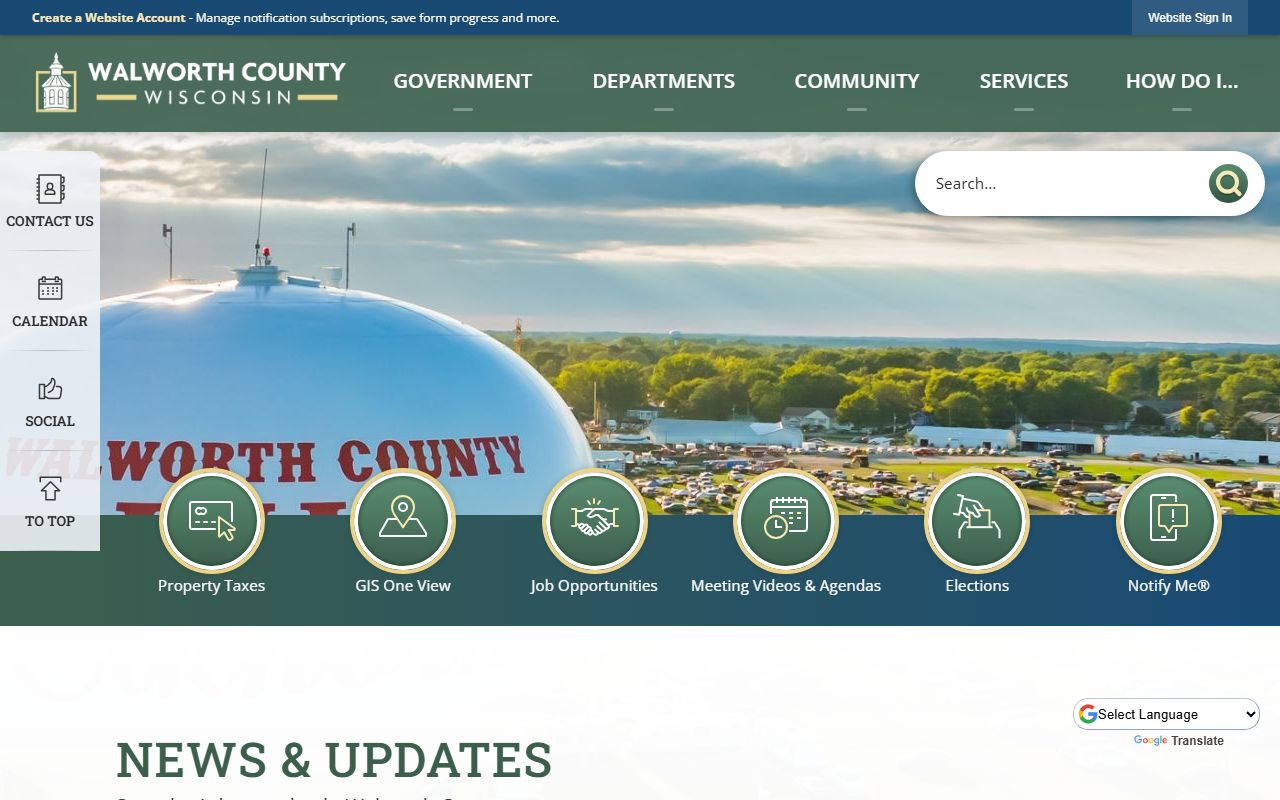
That image keeps the search tied to Elkhorn and the county office structure that matters most for a local death record request.
When a request starts with a burial clue or a newspaper note, the register of deeds still matters first. It can tell you whether the record belongs in the county file, whether a copy may be issued locally, and whether you should turn to the state side later. That keeps the search practical and keeps you from asking the wrong office too soon.
Walworth County Death Index Before 1907
Walworth County death records begin in 1872, and pre-1907 records stay at the county level. That is the key rule for older Walworth County Death Index work. The Wisconsin Historical Society Walworth County article gives the historical checkpoint for that older county run, and it helps you compare a family clue with the right record span before you send a request.
The county was established in 1836 as part of Wisconsin Territory. That long lead time matters because many family histories reach into the county well before the first death record appears. A burial note, a church line, or a cemetery marker may point to the right line faster than a broad name search. When the year is rough, the county history can save you from chasing the wrong decade.
The FamilySearch Walworth County guide helps when the surname is common or the place clue is stronger than the year. It can point you toward township names, cemeteries, and related family lines that fit the county record trail. Use it as a lead, then go back to the county office or the historical society page for the actual record path.
The historical society record lane is useful when you need a second check on an old family death.
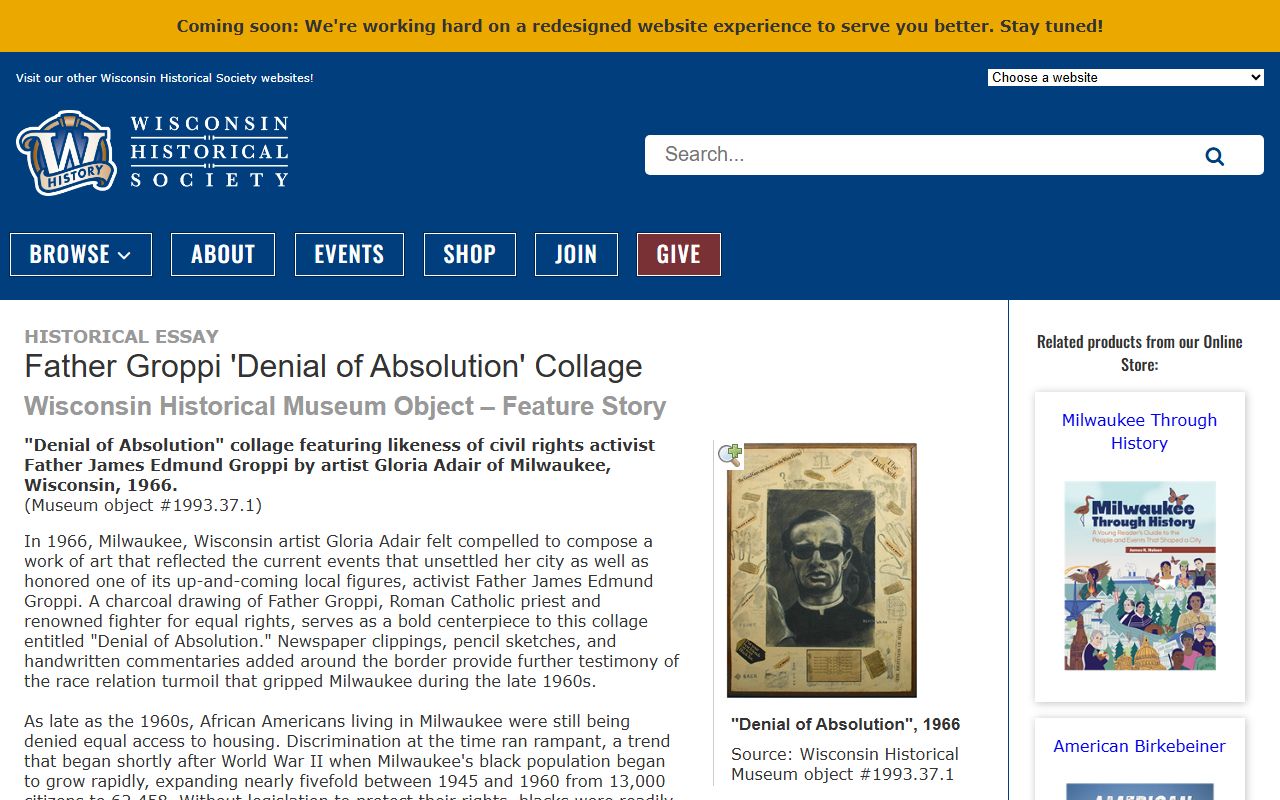
That image shows the local history source behind the county index and helps anchor the 1872 start date in the record trail.
Note: For Walworth County, the county office stays the first stop for deaths from 1872 through September 1907, even when the later state certificate is the copy you need.
Walworth County Death Index and State Records
After October 1, 1907, Wisconsin DHS becomes the main source for certified death records. The Wisconsin DHS Vital Records page explains the modern process, and the DHS genealogy page shows how in-person research works by appointment. That is the right path when a Walworth County Death Index search turns up a later state certificate instead of a county book entry.
For official copies, the DHS certified copy page and Wis. Stat. Chapter 69 explain the legal framework. Section 69.20 covers who may receive a certified copy, and section 69.21 explains what the copy contains. If you only need a search lead, the county office may be enough. If you need a formal certificate for legal or family record use, the state rules matter more.
The VitalChek Wisconsin page gives an online ordering path, and the Library of Congress Wisconsin guide lays out the county-before-state split in plain terms. Those sources help keep the county research on the right side of the 1907 boundary. They also make it easier to decide which office should answer first when a family story has only a rough death year.
The state records lane below shows where later deaths move after the county era ends.
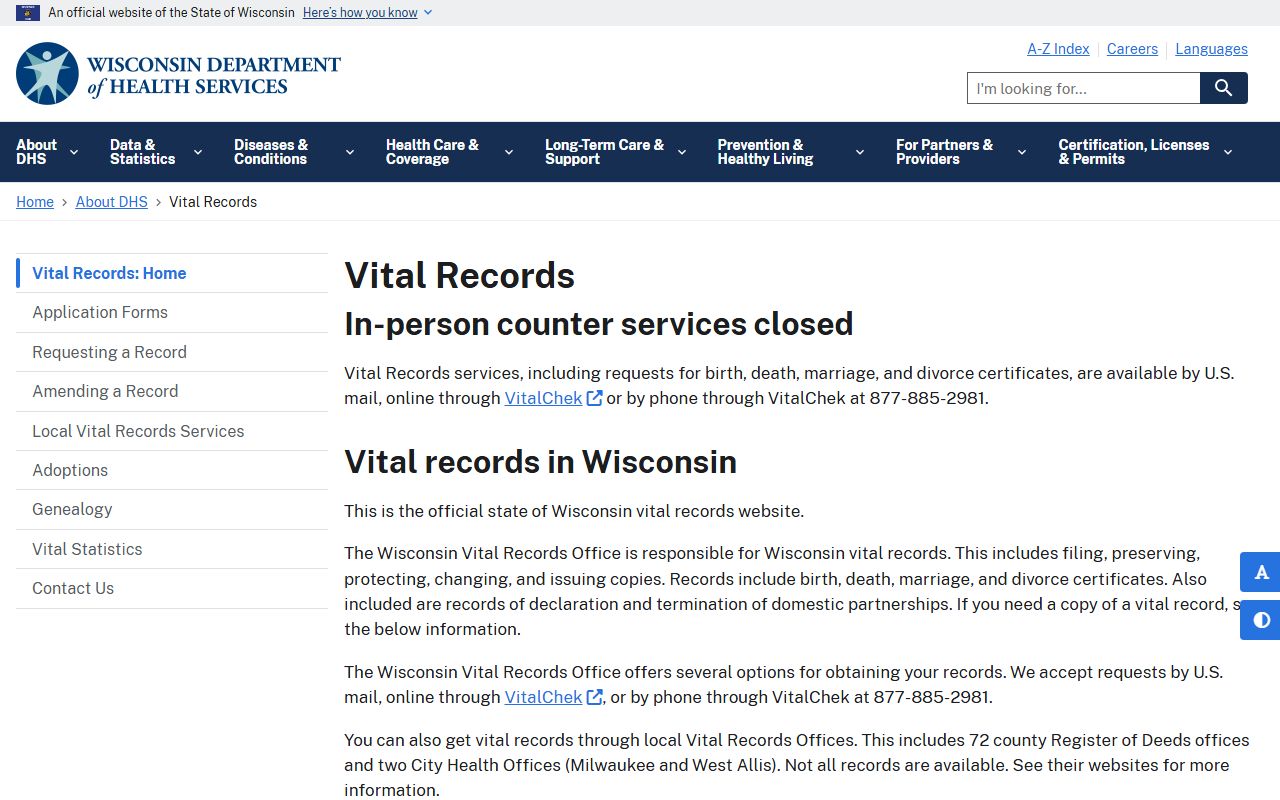
That image is the state fallback for later Walworth County deaths when the county file is no longer the final answer.
Walworth County Death Index Research Help
Walworth County research gets stronger when you pair the county office with broader Wisconsin tools. The Wisconsin Register of Deeds Association explains how county offices fit into the statewide vital-record system, and the Wisconsin State Law Library gathers legal and research links around vital records. Those references help when you need to understand why one office ends and another begins.
The FamilySearch Walworth County guide can also help when the death clue starts with a family story instead of a full certificate citation. That is common in older Walworth County work, especially when the place clue is Elkhorn, a township, or a cemetery name rather than an exact filing year. A broad family note can still be useful if you narrow it against the county history.
The Walworth County Register of Deeds page belongs beside those research tools because it is the local office that can confirm the county copy path. The county office and the historical society page work best together. One points to the local record keeper, and the other points to the older record span that begins in 1872.
Use this short checklist before you request a copy:
- Full name and common spelling variants
- Approximate year or decade of death
- Town, village, or county of death
- Burial clue, cemetery name, or obituary note
- Relationship to the decedent if a certified copy is needed
Walworth County Death Index work is usually faster when you keep the request tight and let the county seat, the historical index, and the state rules guide the order. That avoids wasted time and keeps the search aimed at the office most likely to hold the copy.
Walworth County History
Walworth County was organized in 1836 in Wisconsin Territory, which makes it one of the older counties in the state. That history matters because a county with that much early settlement usually has families whose paper trail runs through church books, cemeteries, newspapers, and county records. A Walworth County Death Index search often works best when you treat the county as a timeline, not just a single file.
The early start also explains why the county office still matters even after the state record system began. Death records from 1872 through September 1907 stayed at the county level, so the local office is not just a formality. It is part of the record trail that researchers have to cross before they can decide whether a death belongs in the county books or in the state certificate system.
Elkhorn gives the county a clear government center, and that helps when a family clue points to place before it points to date. If the death happened near the county seat, the office path is easy to follow. If it happened elsewhere in the county, the same local route still applies, and the county historical index remains the best companion source.
When the clue is thin, the county history can still save the search. A town name, a burial note, or a nearby cemetery can point you back to the right year range, and that often matters more than a broad family memory. Walworth County's record trail is long enough to be useful, but short enough to reward a careful first pass.